
Views: 0 Author: Site Editor Publish Time: 2025-09-18 Origin: Site


For homeowners and businesses planning long-term investments in heating and cooling, one of the most common questions is whether a ground source heat pump or an air source heat pump delivers greater value. At Ruidong Group, we specialize in advanced HVAC systems designed for efficiency, comfort, and reliability. In this article, we take a clear side-by-side look at how these two technologies differ, how they perform under real-world conditions, and what practical factors can guide your choice. By the end, you will have a straightforward comparison that helps determine which system is the better fit for your property.
The fundamental difference between these two systems lies in the medium from which they extract heat. A ground source heat pump uses stable underground temperatures as its energy reservoir. Because soil and groundwater maintain consistent conditions year-round, the system avoids the extreme swings seen in outdoor air. In contrast, an air source heat pump depends on outside air, which can fluctuate widely between seasons and even within a single day. This temperature stability explains why ground source technology is often regarded as more efficient, especially when temperatures dip below freezing.
For users, this translates into smoother operation and fewer efficiency losses during peak winter or summer demand. In mild climates, an air source heat pump can still perform effectively, but in regions with significant temperature variation, the stability of the ground offers a clear performance edge.
System design also differs noticeably. A ground source heat pump requires a buried loop system, either installed vertically through drilled boreholes or horizontally across available land. Once in place, the loops are invisible and require little attention. The indoor unit, similar in size to a conventional HVAC system, connects seamlessly to building ductwork or radiant systems. By contrast, an air source heat pump relies on an outdoor unit, usually resembling a large fan coil, which must remain accessible and free of obstructions.
From a visual and maintenance standpoint, ground source systems tend to have a lower profile. They do not require rooftop fans, external condensers, or cooling towers. This means less exposure to weather, reduced noise, and lower maintenance costs. Air source systems, while simpler to install, will always involve an outdoor component that can be subject to environmental wear and tear.
When evaluating performance across different climates, ground source heat pumps hold a strong advantage in colder regions. Because they draw energy from the earth, where temperatures remain relatively stable, they can maintain high efficiency even during harsh winters. Air source heat pumps, once considered less effective below freezing, have improved significantly in recent years with advanced compressor technology and refrigerants. For moderate climates, a modern air source system may provide ample comfort and efficiency. However, in areas with prolonged cold seasons, the ground source option generally sustains better output and consistency.
Another performance factor is cooling in summer. With a ground source heat pump, the earth provides a naturally cool medium, making the process of rejecting indoor heat easier and less energy-intensive. Air source systems, by comparison, must push against high outdoor temperatures, reducing their efficiency during heatwaves. For buildings that require both heating and cooling throughout the year, this dual advantage strengthens the case for ground source systems.
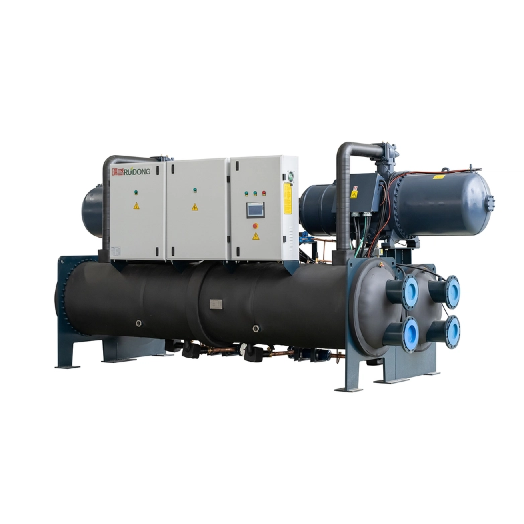
One of the most discussed differences between these systems is the installation process. A ground source heat pump requires either drilling or trenching to lay the loop field. This can involve specialized equipment and planning, as well as temporary disruption to landscaping. While this is a one-time requirement, it is more complex than setting up an air source heat pump, which typically involves placing an outdoor unit and connecting it to the indoor system.
Yet, once installed, a ground source system is remarkably low-maintenance. Without exposed outdoor fans or coils, the equipment experiences less weathering, leading to a longer lifespan. Typical ground source systems can operate for decades, with underground loops lasting even longer. Air source heat pumps, though easier to install, may require more frequent servicing and have shorter expected lifespans.
Over the years, operating savings become one of the strongest arguments for ground source technology. Because the system works with stable temperatures, it consumes less energy to deliver the same heating or cooling output. This efficiency translates into reduced utility costs across the system’s life. Air source heat pumps, while less costly upfront, may not provide the same level of savings over time, particularly in demanding climates. For users planning to remain in a property long term, the extended lifespan and lower maintenance profile of ground source systems make them a compelling investment.
Not every property can accommodate a ground loop installation, especially in dense urban areas or on small plots with limited land. In such cases, an air source heat pump may be the practical solution. There are also hybrid systems that combine elements of both technologies, allowing buildings to benefit from efficient ground-sourced heating in winter while relying on air source units for supplemental cooling or transitional loads. These crossover designs can provide flexibility where full ground installation is not feasible, offering a tailored balance of performance and practicality.
When comparing ground source versus air source, the right choice depends on your priorities and property conditions. Here are some guiding points to consider:
If you value long-term stability, minimal outdoor equipment, and a system that can quietly operate for decades, the ground source heat pump is the superior choice. Its underground design shields the system from weather extremes, while its efficiency ensures year-round comfort.
If avoiding major construction is your priority, or if your property lacks sufficient land for loop installation, an air source heat pump may be the more practical solution. It offers quicker installation, reliable operation in moderate climates, and a smaller upfront project footprint.
When exploring heat pump options, use the following checklist to ensure you receive accurate and fair proposals:
Ask whether the proposed system has been sized according to your building’s heating and cooling loads, insulation levels, and local climate. Proper sizing ensures comfort without unnecessary energy use.
For ground source systems, inquire about the loop configuration—vertical or horizontal—and how it will be installed on your property. A well-planned loop field is critical to long-term performance.
Request examples of completed projects in your area. Seeing how systems perform for other clients provides confidence in both the technology and the installer’s expertise.
The decision between a ground source heat pump and an air source heat pump ultimately depends on your property, climate, and investment horizon. Use this quick checklist to guide your choice:
Do you want the quietest operation with minimal outdoor equipment? → Ground source.
Is your property in a region with severe winters or hot summers? → Ground source for higher efficiency.
Do you prefer a simpler installation with less upfront disruption? → Air source.
Is long lifespan and lower maintenance more important than initial cost? → Ground source.
Are you working with limited land or building constraints? → Air source or a hybrid solution.
Choosing between a ground source heat pump and an air source heat pump is not a one-size-fits-all decision. At Ruidong Group, we provide both technologies and help clients identify the system that aligns with their climate, property layout, and long-term goals. A high-performance ground source heat pump stands out for efficiency, durability, and quiet operation, while air source systems offer flexibility and simpler installation. To discuss which option suits your project best, contact us today for a tailored comparison and professional guidance.