
Views: 0 Author: Site Editor Publish Time: 2025-09-25 Origin: Site


Every property has its own terrain and conditions, and when it comes to installing a Ground Source Heat Pump, the choice of ground loop design is critical. The ground loop acts as the hidden backbone of the system, responsible for transferring energy between the earth and your home. Choosing the right design is not about guesswork—it depends on space, soil type, water resources, and long-term efficiency. In this article, we’ll explore the major loop options, compare their advantages, and help you understand what professional installers evaluate before recommending the best solution for your property. As one of the leading HVAC system manufacturers, Ruidong Group provides reliable Ground Source Heat Pump solutions tailored to diverse site conditions.
The performance of a Ground Source Heat Pump is highly dependent on how the loop is installed. Three primary closed-loop designs are most common: horizontal loops, vertical loops, and pond or lake loops. While each performs the same basic function, their installation methods and suitability vary significantly. Understanding these differences helps homeowners and project managers make informed decisions.
Horizontal ground loops are laid out in trenches a few feet below the surface. They are often chosen for properties with enough land area and relatively easy soil conditions.
Pros:
Generally lower installation costs compared to vertical loops.
Easier to install with standard excavation equipment.
Accessible for maintenance or future adjustments.
Cons:
Require a large surface area, which may not be available on small lots.
Efficiency can be affected by seasonal surface temperature fluctuations.
Tree roots or landscaping features may restrict installation.
Horizontal loops are ideal for rural or suburban properties with open land. They offer a balance between affordability and performance when space is not a limiting factor. Homeowners who value lower upfront investment often start with this option, though long-term efficiency should always be considered.
Vertical loops are installed using deep boreholes, sometimes several hundred feet into the ground. They are a common choice for urban or compact sites.
Pros:
Require very little surface land, making them perfect for small lots.
Provide stable year-round performance, less affected by surface temperature changes.
Suitable for areas with rocky or uneven terrain where trenching is difficult.
Cons:
Higher drilling and installation costs.
Specialized equipment is required, limiting installer availability in some regions.
Once installed, adjustments are difficult.
Vertical loops are often recommended when efficiency is a top priority and land space is restricted. They are also well suited for large buildings or projects requiring high capacity. For projects where energy efficiency standards are particularly strict, vertical systems provide a consistent and reliable option.
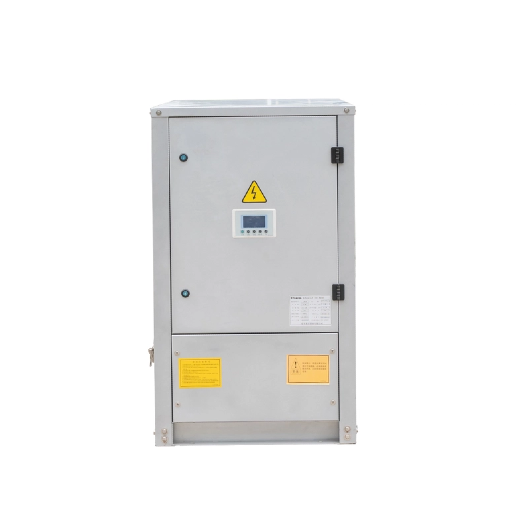
For properties with a reliable body of water nearby, pond or lake loops can be an efficient option. The coils are submerged at the bottom of the water, using the stable temperature of the water mass to exchange heat.
Site suitability and considerations:
The water body must be deep enough and large enough to support the thermal load.
Local environmental permits may be required before installation.
Water quality and ecological impact assessments are often necessary.
Pond loops can reduce installation costs by avoiding deep drilling or extensive trenching. However, they are limited to properties with natural water features that meet the technical and environmental criteria. For lakeside or riverside properties, this method can be both cost-effective and highly efficient, provided proper approvals are secured.
Open-loop systems, though less common, directly use groundwater as the heat exchange medium. While efficient, they require excellent water quality and strict regulatory compliance, which makes them more challenging to implement. Homeowners considering this route should be prepared for additional monitoring and maintenance compared to closed systems.
Not every project fits neatly into one category. Hybrid designs and advanced configurations are emerging to meet unique needs.
Community loops: Multiple buildings share a single loop field, reducing land use and installation cost per unit.
High-temperature loops: Certain historic buildings or industrial facilities demand higher supply temperatures, requiring specially engineered systems.
These configurations highlight the flexibility of Ground Source Heat Pump technology in addressing both standard residential use and specialized applications. For developers and municipalities, community loops are becoming a sustainable option to serve multiple households with shared infrastructure.
Before a loop design is chosen, professional installers conduct a detailed site survey. This process ensures that the selected system will deliver efficient performance for decades.
Key factors include:
Soil testing: Determines heat conductivity, moisture content, and digging conditions.
Hydrogeology: Assesses groundwater levels and the potential for open-loop or pond-loop solutions.
Access for drilling or excavation: Ensures equipment can reach the installation site without major disruption.
Tree and root impacts: Prevents long-term damage to landscaping and ensures loops are not obstructed.
This stage is critical because it prevents costly mistakes and ensures the system is customized to property-specific conditions. A well-executed survey also provides accurate projections of performance, helping homeowners understand energy savings before committing to installation.
Homeowners often want to know what the installation process looks like. Although the timeline varies by loop type, there are general stages you can expect.
Site preparation: The property is surveyed, marked, and cleared for excavation or drilling.
Loop installation: Trenches are dug for horizontal loops, boreholes drilled for vertical systems, or coils submerged in ponds.
Testing and commissioning: Once the loop is in place, it is filled, pressure-tested, and connected to the Ground Source Heat Pump unit. The system undergoes checks to ensure efficient operation.
During installation, there will be temporary disruption such as machinery on-site, soil excavation, and noise. Horizontal systems may cause more visible surface impact, while vertical drilling tends to be localized. After completion, landscaping can usually be restored, leaving the loop invisible and maintenance-free. Most projects are completed within a few weeks, depending on weather, soil, and the complexity of the loop design.
Selecting between horizontal, vertical, or pond loops is not about preference—it is about matching your property’s characteristics to the best technical solution.
Horizontal loops are best when land is abundant and soil conditions are favorable.
Vertical boreholes excel in small or urban properties where efficiency must be maximized.
Pond or lake loops are cost-effective if a suitable water source exists.
Hybrid systems provide solutions for shared spaces or unique heating demands.
Ruidong Group has extensive experience in designing and installing these configurations. With decades of expertise, a large engineering team, and internationally recognized certifications, we ensure every Ground Source Heat Pump system is optimized for comfort, efficiency, and longevity.
The success of an energy-efficient Ground Source Heat Pump depends heavily on selecting the right ground loop design. Horizontal, vertical, pond, and hybrid systems each offer distinct benefits, but the final choice comes down to your property’s specific conditions. With the guidance of Ruidong Group, homeowners and project managers can achieve an energy-efficient system that delivers reliable heating, cooling, and hot water while minimizing long-term costs. To explore which loop design is right for your property, contact us today and learn more about our customized solutions.