Views: 0 Author: Site Editor Publish Time: 2026-04-06 Origin: Site


In modern buildings, stable cooling is no longer just a comfort issue. It directly affects business continuity, indoor air quality, energy use, and the performance of critical equipment. Office towers, hotels, shopping centers, hospitals, schools, and mixed-use developments all rely on dependable commercial cooling systems to maintain the right indoor environment under changing seasonal and operational loads. Among the many types of chillers used in these projects, the water cooled scroll chiller stands out for its balance of efficiency, compact design, dependable operation, and suitability for medium-sized commercial applications. For many buyers and facility managers, however, the technology still feels technical and difficult to compare with other systems. Understanding how it works is the first step toward making better project decisions, selecting the right equipment, and improving long-term system performance.
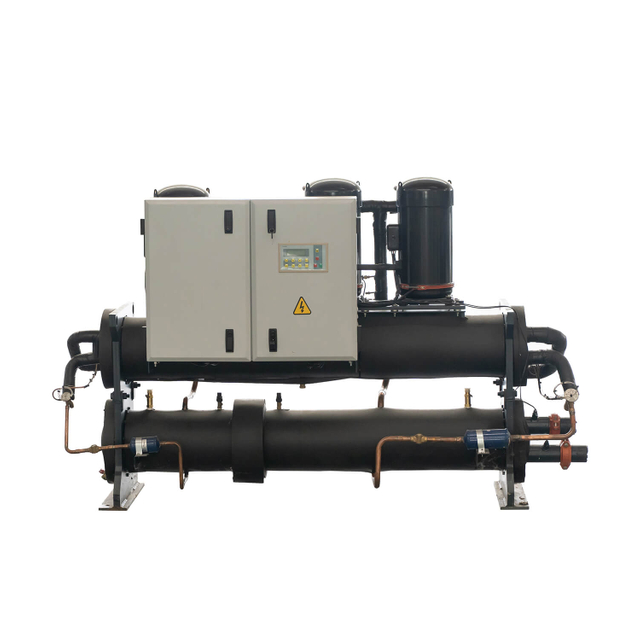
A water cooled scroll chiller is a type of refrigeration system designed to remove heat from water and transfer that heat to a separate water loop, usually connected to a cooling tower. The chilled water produced by the unit is then circulated through air handling units, fan coil units, or other terminal devices to cool indoor spaces.
What makes this type of chiller important in commercial cooling systems is its practical balance between performance and simplicity. Compared with some larger central plant solutions, it can offer easier installation and modular application. Compared with air-cooled alternatives, it often provides stronger efficiency in the right operating conditions because water-based heat rejection is more effective than relying only on outdoor air.
This makes water cooled scroll chillers a strong option for projects where building owners want reliable cooling, reasonable operating costs, and a compact mechanical solution.
To understand the working principle, it helps to first break down the name itself.
· Water cooled means the chiller rejects heat through water rather than directly discharging it into outdoor air.
· Scroll refers to the type of compressor used inside the system.
· Chiller means the unit is designed to cool water for use in a building or industrial process.
In most commercial applications, the chiller is part of a larger system that includes chilled water piping, condenser water piping, pumps, indoor heat exchange equipment, and a cooling tower.
The main task of the chiller is simple in concept: it absorbs heat from the building through the chilled water loop, then releases that heat through the condenser water loop. The actual process is powered by a refrigeration cycle and controlled through several key components working together.
A water cooled scroll chiller may vary by manufacturer and model, but the core components are generally similar.
The compressor is the heart of the refrigeration cycle. In a scroll design, two spiral-shaped elements compress refrigerant gas smoothly and efficiently. One scroll remains fixed while the other orbits, reducing the volume of refrigerant and increasing its pressure.
The evaporator is where the refrigerant absorbs heat from the chilled water loop. As heat transfers from the water to the refrigerant, the water temperature drops and the refrigerant evaporates into a low-pressure vapor.
In a water cooled chiller, the condenser transfers heat from the refrigerant to the condenser water loop. This heated water then travels to the cooling tower where the heat is discharged from the system.
The expansion valve or expansion device reduces the pressure of the refrigerant before it enters the evaporator. This pressure drop allows the refrigerant to cool significantly and prepare for the next heat absorption stage.
Modern chillers include sensors, controllers, protection devices, and communication interfaces. These systems regulate temperature, loading, compressor staging, safety shutdowns, and system optimization.
Together, these parts create the operating cycle that allows commercial cooling systems to function continuously and efficiently.
The easiest way to understand a water cooled scroll chiller is to follow the path of the refrigerant and water through one full cycle.
Inside a building, chilled water absorbs heat from the indoor environment as it circulates through air handlers or fan coil units. After doing this job, the water returns to the chiller at a higher temperature. This warmer return water enters the evaporator.
Inside the evaporator, the refrigerant is at low pressure and low temperature. It absorbs heat from the return water, causing the water to cool down. The cooled water is then sent back into the building to continue air conditioning.
At the same time, the refrigerant changes from a liquid or liquid-vapor mixture into vapor.
The vapor refrigerant moves to the scroll compressor. Here, the compressor increases its pressure and temperature. This is a crucial stage because the refrigerant must be hotter than the condenser water in order to reject heat effectively in the next step.
The high-pressure, high-temperature refrigerant enters the condenser. Condenser water flowing through the system carries away the heat from the refrigerant. As the refrigerant loses heat, it condenses back into a high-pressure liquid.
This is where the “water cooled” part of the system becomes especially important. Instead of depending on ambient air, the chiller uses a water loop to remove heat more effectively.
The condenser water, now warmed by the heat removed from the refrigerant, travels to the cooling tower. At the cooling tower, the unwanted heat is released to the atmosphere. The cooled condenser water then returns to the chiller condenser to repeat the cycle.
After leaving the condenser, the high-pressure liquid refrigerant passes through the expansion device. Its pressure drops, its temperature falls, and it becomes ready to enter the evaporator again.
This continuous cycle allows the chiller to remove heat from the building and maintain comfortable indoor conditions.
The table below helps summarize the flow of energy and fluids in a typical water cooled scroll chiller system.
System Part | What Moves Through It | Main Function | Result |
Evaporator | Chilled water and refrigerant | Absorbs heat from building water loop | Water gets colder |
Scroll compressor | Refrigerant vapor | Raises pressure and temperature | Refrigerant becomes hot gas |
Condenser | Refrigerant and condenser water | Transfers heat from refrigerant to water | Refrigerant becomes liquid |
Cooling tower | Condenser water | Rejects heat to atmosphere | Water cools before returning |
Expansion device | Refrigerant | Reduces pressure and temperature | Refrigerant ready for evaporation |
This process is simple in theory, but the efficiency of the whole commercial cooling system depends on how well each part is matched, controlled, and maintained.
A water cooled scroll chiller works by using a refrigeration cycle to remove heat from a building’s chilled water loop and transfer that heat to a condenser water loop, which then carries it to a cooling tower for rejection. While the principle is straightforward, the value of the system lies in how effectively its components work together: the evaporator absorbs heat, the scroll compressor raises refrigerant pressure, the condenser releases heat into water, and the expansion device resets the cycle. In commercial cooling systems, this design offers a practical combination of energy performance, operational stability, and adaptability for a wide range of buildings. From our perspective, the most successful projects are the ones that treat chiller selection as part of a full-system decision rather than a single equipment purchase. At Ruidong Group Co., Ltd, we understand that buyers need more than technical labels; they need clear guidance on configuration, application fit, and long-term performance. If you are evaluating cooling solutions for a commercial project and want to understand which approach makes the most sense in practice, it is worth learning more from Ruidong Group Co., Ltd and discussing the options in a more grounded, project-focused way.
Its main function is to remove heat from chilled water used in a building and transfer that heat to a condenser water loop, which then releases the heat through a cooling tower.
It is called a scroll chiller because it uses a scroll compressor, which compresses refrigerant through the motion of two spiral-shaped scroll elements.
Not always. It is generally more suitable for commercial projects that can support condenser water piping, cooling tower installation, and the maintenance needs of a water cooled system.
Chilled water carries cooling into the building, while condenser water carries unwanted heat away from the chiller to the cooling tower.