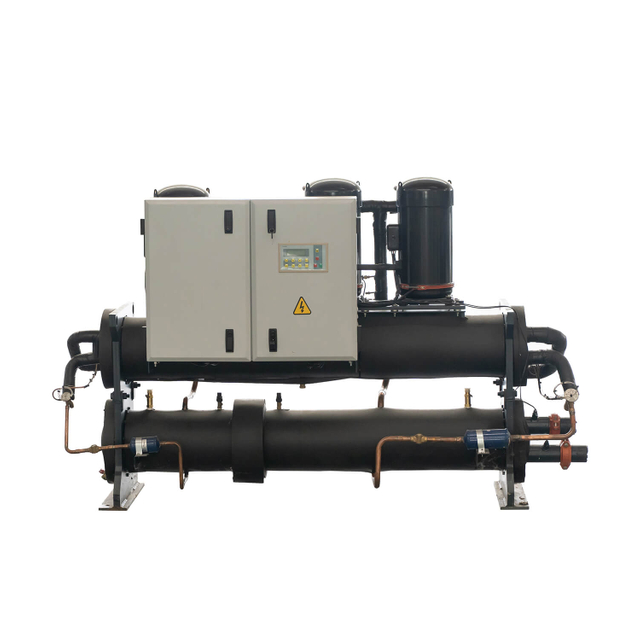
Choosing a
water cooled scroll chiller is usually a project decision, not just a product decision. On paper, these systems can offer strong efficiency, stable cooling performance, and a compact equipment footprint, especially when compared with air-cooled alternatives in larger applications. But the installation side is more demanding than many buyers expect, because the chiller is only one part of a broader system that also includes condenser-water piping, pumps, cooling tower coordination, electrical integration, control logic, water treatment, and enough service access to keep the unit reliable over time. Before delivery ever reaches the site, the smarter question is not simply “Which model should we buy?” but “Is the building, plant room, and support system actually ready for this machine?” That is the real starting point for anyone asking what to know before installing a water cooled scroll chiller.
Start With the Actual Cooling Load
A common mistake is selecting a chiller by nominal tonnage alone. In practice, installation planning should begin with the real operating profile: peak load, part-load behavior, chilled-water temperatures, expected delta-T, condenser-water temperatures, climate conditions, and whether future expansion is likely. Professional guidance on water-cooled chiller selection highlights that system size and configuration, chilled-water temperatures and flows, and condenser-side temperatures and flows all influence the right selection.
That matters because a chiller can be “big enough” and still be poorly matched. If the leaving-water temperature, building load variation, or condenser-water conditions are not aligned with the selection, the result may be unstable cycling, avoidable energy use, or difficulty maintaining design temperatures during real operation. In other words, correct sizing is not just about peak demand. It is about how the chiller will live day to day.
Understand the Full System Around the Chiller
A water-cooled installation is not self-contained in the same way many people imagine. In a water-cooled HVAC system, condenser water absorbs heat from refrigerant and then rejects that heat through a cooling tower. That means your project scope must account for the condenser-water loop, tower capacity, pumps, valves, and associated controls, not only the chiller itself.
This is also why first cost should be evaluated as a system cost, not an equipment-only cost. Professional insights note that cooling tower sizing, condenser-water pump sizing, pipe sizing, roof or structural considerations, and electrical implications can all affect installed cost and long-term energy performance. So before approving a chiller order, it is worth confirming whether the tower, pumps, and piping strategy are part of a coordinated plan or just an assumption inherited from an older project.
Check the Installation Environment Before Delivery
For many packaged scroll units, the chiller arrives factory assembled, pressure tested, evacuated, charged, and operationally tested. That simplifies site work, but it does not eliminate the need for a proper installation environment.
Standard water-cooled scroll chiller installation guidelines state that such units are designed for indoor installation in a plant room, with field installation still required at the site.
The plant room itself matters more than many procurement teams realize. Standard installation guidance warns against wet, corrosive, or explosive atmospheres and calls for drainage, ventilation, and enough service clearance for maintenance tasks such as tube cleaning or removal. In noise-sensitive areas, sound-attenuating construction and vibration isolation may also be needed. This means the right room is not just one with enough floor area; it is one that supports safe operation, airflow, drainage, access, and serviceability.
A practical site checklist
Before the unit is moved in, confirm:
Floor loading and structural capacity
Clear access path for delivery and rigging
Indoor environmental suitability
Drainage and ventilation
Noise and vibration requirements
Space for future service work
Water Quality Is Not a Minor Detail
One of the most overlooked parts of water cooled scroll chiller installation is water quality. Professional expertise notes that water quality affects compatibility with construction materials, while standard guidance points out that fluid choice and water quality can influence tube selection, compressor capabilities, motor selection, and exchanger options such as coatings, anodes, and cleaning systems.
In a typical chiller design, the evaporator is part of a closed-loop chilled-water system, while the water-cooled condenser rejects heat to an open recirculating system connected to an evaporative cooling tower. In that open loop, dissolved contaminants become more concentrated as water evaporates, which is why qualified water treatment is so important. Standard industry guidelines explicitly state that evaporative recirculating cooling-water systems require a qualified water-treatment professional, and it also notes that filtration of part of the recirculating water is a common method for removing suspended contaminants.
Why this matters in real projects
Poor water treatment does not usually fail dramatically on day one. It creates gradual problems:
Scale on heat-transfer surfaces
Corrosion risk
Fouling and reduced efficiency
Higher maintenance frequency
Shorter exchanger life
That is why water chemistry should be discussed before installation, not after performance starts slipping.
Piping Design Deserves More Attention Than It Gets
Good installations usually succeed or fail on the water side. Standard piping arrangements for evaporator and condenser circuits include balancing valves, isolation valves, thermometers, drains and vents, strainers, pumps, pressure gauges, and proof-of-flow switches. Those are not decorative accessories; they are part of what makes startup, balancing, troubleshooting, and safe operation possible.
Just as important, piping should be supported so it does not place stress on the equipment. Standard installation recommendations suggest that piping not be run too close to the chiller during installation, and emphasize that isolation valves should be located so service can be performed on flow devices, thermometers, flexible connectors, and removable spool pieces. If the piping layout is cramped, the installation may look neat on day one but become expensive every time service is required.
Leave Room for Maintenance, Not Just Installation
A useful installation is not one that merely fits; it is one that can be maintained without dismantling half the mechanical room. Standard installation guidelines for indoor water-cooled scroll chillers specifically call for sufficient service clearance, including access for tube cleaning or removal. Standard piping guidance similarly recommends practical isolation space for sensors, flow devices, flexible connectors, and removable pipe sections.
The table below summarizes the difference between a minimal-fit approach and a maintenance-ready approach:
Installation Item | Minimal-Fit Mindset | Better Long-Term Approach |
Plant room layout | Only enough room to place unit | Space for service, inspection, and tube access |
Piping arrangement | Pipes routed tightly to save space | Pipes supported and spaced for adjustment and removal |
Water treatment | Considered after startup | Planned before operation begins |
Controls | Basic start/stop only | Integrated alarms, monitoring, and sequencing |
Flow protection | Added late or improvised | Designed into both evaporator and condenser circuits |
Tower and pump selection | Based on habit or legacy design | Coordinated with load, flow, and efficiency goals |
This is often where long-term ownership cost is decided. A project that saves a little floor space at installation can lose far more later through difficult maintenance, slower repairs, and avoidable downtime.
Final Thoughts
When researching water cooled scroll chiller installation, focus on system readiness over product delivery. Successful projects align cooling load, plant room, condenser-water loop, water treatment, flow protection, controls, and maintenance needs before energizing the chiller—this cuts startup risk, preserves efficiency, and eases long-term use. For buyers, comparing only price or nominal capacity is hasty; partnering with a supplier who understands real-world interactions between chillers, piping, towers, controls, and the operating environment is far more valuable. At
Ruidong Group Co., Ltd, we believe sound projects start with realistic technical planning and clear communication about site conditions, goals, and maintenance. If evaluating an installation or replacement,
consulting an experienced manufacturer for practical solutions is worthwhile.
FAQ
1. Can a water cooled scroll chiller be installed outdoors?
Many packaged water-cooled scroll chillers are designed for indoor plant-room installation rather than exposure to wet, corrosive, or hazardous environments. The correct answer depends on the specific model, so the installation manual should always be checked first.
2. Why is water treatment so important for a water cooled scroll chiller?
Because water quality affects material compatibility, fouling risk, corrosion behavior, and heat-transfer performance. In open condenser-water systems with cooling towers, contaminants become more concentrated as water evaporates, so treatment and often filtration are essential.
3. Are strainers and flow switches both necessary?
In typical water piping arrangements, strainers help protect the circuit from debris, while proof-of-flow switches confirm that adequate water flow exists before operation and during running conditions. They serve different purposes, and both are commonly recommended.
4. What should be confirmed before first startup?
A solid startup should verify that the piping has been vented, air removed, flow proven, strainers checked, valves positioned correctly, and controls responding properly. Startup should also confirm that the unit sees the right water flow and that protection logic is active.