Views: 0 Author: Site Editor Publish Time: 2026-04-10 Origin: Site


In modern cooling applications, efficiency is no longer just a desirable feature. It has become a critical requirement for factories, commercial buildings, medical facilities, hotels, data-sensitive spaces, and many process cooling environments. Rising energy costs, tighter environmental expectations, and the need for stable thermal control have pushed buyers to pay closer attention to the type of chiller system they select. Among many available options, the water cooled scroll chiller continues to stand out as a preferred solution for high efficiency cooling. It combines compact compressor technology with the heat transfer advantages of water-based condensation, making it a practical choice for users who need reliable operation, lower energy consumption, and consistent performance over long operating cycles.
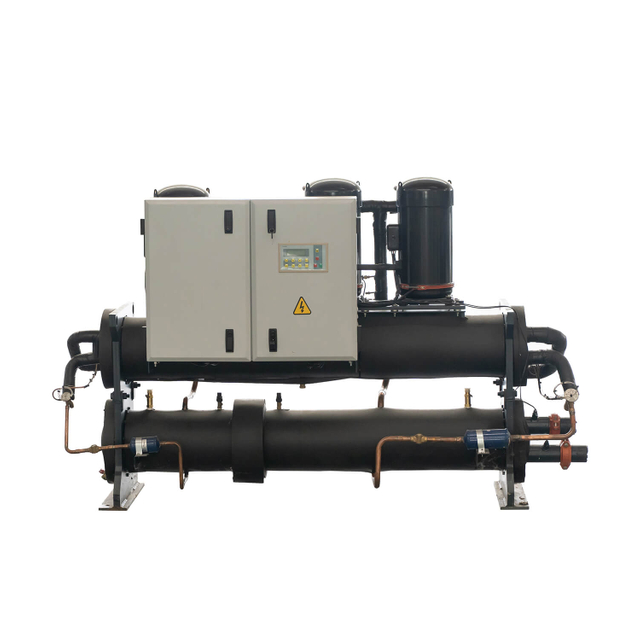
A water cooled scroll chiller is a cooling system that uses scroll compressors to circulate refrigerant and remove heat from a process or building loop, while rejecting that heat through a water-cooled condenser rather than through ambient air. This basic difference in condenser type is one of the main reasons these systems are often selected for high efficiency cooling systems.
Scroll compressors are known for smooth compression, fewer moving parts compared with some other compressor types, and reliable performance in many medium-capacity cooling applications. When combined with water cooling, the system can maintain more stable condensing conditions than air-cooled designs, especially in environments where outdoor temperatures fluctuate heavily.
This combination offers several practical benefits:
· improved heat exchange performance
· better energy efficiency under sustained load
· quieter equipment operation
· reduced exposure to outdoor air conditions
· suitability for indoor equipment rooms and central cooling plants
The efficiency advantage of a water cooled scroll chiller largely comes from the way heat is rejected. Water is a more effective medium for heat transfer than air, which allows the condenser side of the system to operate more efficiently.
In air-cooled systems, performance often drops when outdoor temperatures rise. The condenser has to work harder because the temperature difference between the refrigerant and the ambient air becomes smaller. In water-cooled systems, the condenser can reject heat to cooling water more effectively, particularly when connected to a well-designed cooling tower or water loop.
This leads to several performance advantages:
Lower condensing temperature generally reduces compressor workload. That means less power is required to produce the same cooling effect.
Water-cooled systems are less directly affected by hot outdoor air, which helps maintain consistent cooling output.
In many commercial and industrial scenarios, water-cooled chillers perform especially well when the cooling demand is sustained for long periods.
For facilities that operate all day or throughout most of the year, this efficiency difference can become very meaningful.
The scroll compressor is one of the main reasons these chillers are favored in many medium-capacity applications. Its design provides smooth compression and dependable operation, which supports both performance and service life.
Scroll compressors are relatively compact, helping reduce equipment footprint and making them easier to integrate into packaged chiller systems.
Because the compression process is smoother, scroll systems often operate with less vibration than some alternative compressor types.
Many cooling systems do not run at full load all the time. Scroll chiller configurations can respond effectively to varying demand, especially when multiple compressors are used in staged operation.
Although all cooling systems require maintenance, the scroll design is often appreciated for its mechanical simplicity and dependable performance.
In practical applications, this means a scroll chiller for commercial cooling can offer a useful balance between efficiency, stability, and operational convenience.
Water cooled scroll chillers are selected across a wide range of sectors because they can serve both comfort cooling and process cooling needs. Their versatility is one reason they remain popular.
Common applications include:
· office buildings
· shopping centers
· hotels
· hospitals
· pharmaceutical workshops
· food and beverage processing plants
· light industrial facilities
· plastic and equipment cooling lines
· educational campuses
In these environments, the need is often not just for cooling, but for stable and controllable cooling. Temperature fluctuation can affect occupant comfort, equipment reliability, product quality, or process precision. A well-matched industrial water cooled chiller helps reduce that risk.
Many buyers compare water-cooled systems with air-cooled chillers during project planning. Both have their place, but the choice depends on space conditions, efficiency goals, and long-term operating strategy.
Comparison factor | Water cooled scroll chiller | Air-cooled chiller |
Heat rejection method | Uses water loop or cooling tower | Uses ambient air |
Energy efficiency | Usually higher in sustained operation | Often lower in high ambient temperatures |
Installation environment | Suitable for plant rooms and central systems | Easier for rooftop or outdoor placement |
Noise level | Often lower indoors | Outdoor fan noise may be higher |
Performance stability | More stable across temperature changes | More affected by outdoor weather |
Maintenance focus | Water treatment and condenser loop care | Coil cleaning and fan system checks |
Best suited for | Projects prioritizing long-term efficiency | Projects prioritizing simpler installation |
This table helps explain why water cooled scroll chiller systems are chosen for high efficiency cooling in many long-duration operating environments. Their initial system complexity may be slightly greater, but their operating efficiency and thermal stability often justify that decision over time.
When buyers hear “high efficiency cooling,” they often think only about electricity bills. But the value of a water cooled scroll chiller goes beyond simple energy reduction.
A stable system helps protect process continuity and indoor comfort. This can be especially important in temperature-sensitive operations.
Energy savings accumulate over time, but so do gains from reduced thermal stress, consistent output, and lower risk of performance decline in hot weather.
Water cooled chillers often work well in centralized plant designs, allowing better coordination with pumps, cooling towers, and building automation systems.
In certain commercial or indoor equipment room applications, the quieter performance of scroll-based water cooled systems is a real advantage.
So while energy performance remains a major selling point, the broader reason for choosing these chillers is often total system quality rather than one metric alone.
Selecting the right chiller requires more than choosing a model by tonnage. A suitable system should match the project’s actual load profile, operating pattern, and installation conditions.
Make sure the selected unit matches both the peak load and the normal operating load. Oversizing can reduce efficiency, while undersizing can strain the system.
Since the system relies on water-side heat exchange, water quality, flow rate, and proper loop design are all essential. Poor water management can reduce efficiency and increase maintenance needs.
A water cooled chiller usually requires supporting components such as pumps, piping, and a cooling tower or water circulation infrastructure. These should be considered early in project design.
Modern chillers can offer staged compressors, smart controllers, and fault monitoring features. These functions improve energy use and operational convenience.
The best high efficiency cooling system is one that remains efficient over time. That requires planned maintenance, water treatment, and regular inspection.
From our perspective, the reason water cooled scroll chiller systems are chosen for high efficiency cooling is straightforward: they offer a balanced combination of energy performance, stable operation, quiet running, and dependable cooling for a wide range of commercial and industrial uses. In real projects, buyers are not simply looking for a machine that can produce chilled water. They are looking for a system that can continue performing efficiently under changing loads, extended operating hours, and practical site conditions. At Ruidong Group Co., Ltd, we believe the most suitable solution comes from matching system design to the actual cooling demand rather than relying on broad assumptions. When customers evaluate a new installation, an upgrade, or a replacement project, it often helps to discuss capacity, water-side conditions, controls, and long-term operating goals in detail. For readers who want to understand more about selecting a reliable water cooled scroll chiller or comparing options for efficient cooling projects, learning more from Ruidong Group Co., Ltd can be a practical next step.
The main advantage is higher operating efficiency, especially in applications with sustained cooling demand. Water cooling allows better heat rejection than air cooling in many conditions.
Yes. It is widely used in industrial and commercial settings where stable chilled water supply, energy efficiency, and reliable long-hour operation are important.
It requires attention to the water loop, condenser side, and water treatment, but this is often balanced by better performance stability and long-term operating value.
You should evaluate cooling load, operating hours, site layout, water system conditions, efficiency targets, and maintenance capability before making a decision.