
Views: 0 Author: Site Editor Publish Time: 2026-08-03 Origin: Site


Efficient and reliable cooling is critical for industrial and commercial operations, where temperature control impacts productivity, equipment longevity, and occupant comfort. Among the most versatile solutions available, Air Cooled Chiller systems, particularly Air Cooled Scroll Chillers integrated with Heat Pump technology, are gaining popularity due to their energy efficiency, compact design, and eco-friendly operation. These systems offer not only cooling but also heating capabilities, providing a dual-function solution suitable for offices, manufacturing plants, data centers, healthcare facilities, and more. Businesses seeking sustainable HVAC solutions increasingly prefer air cooled technology because it reduces water consumption, lowers installation and maintenance costs, and can be easily scaled to match changing cooling demands. In addition, the ability to integrate with modern building management systems allows for intelligent monitoring, predictive maintenance, and optimal energy usage, further enhancing the value of Air Cooled Scroll Chillers for industrial and commercial applications.
An Air Cooled Chiller is a type of HVAC system that removes heat from a liquid, typically water or a water-glycol mixture, and dissipates it into the ambient air. Unlike water-cooled chillers that rely on a cooling tower, air cooled systems use fans and air-cooled condensers to release heat directly into the atmosphere. These systems are highly versatile, making them suitable for both small- and medium-sized facilities, as well as large industrial plants where water availability is limited or operational simplicity is a priority.
Water-cooled chillers are often used for large-scale applications due to their high efficiency in stable environments, but they require extensive infrastructure such as cooling towers, pumps, and water treatment systems. This increases both capital costs and operational complexity. Air cooled chillers, in contrast, eliminate the need for water towers, circulation pumps, and complex plumbing, simplifying installation and reducing potential points of failure. They are also easier to relocate or expand, making them suitable for facilities anticipating future growth.
The growing emphasis on sustainability, water conservation, and flexible deployment has fueled the adoption of air cooled systems in industrial and commercial sectors. Facilities in regions with limited water availability or space constraints particularly benefit from the air cooled design, which is easier to install outdoors and requires minimal water consumption while providing reliable performance even in challenging climates. Additionally, air cooled systems can operate efficiently in a wide range of environmental conditions, from hot, dry regions to more humid climates, offering a dependable solution where water-cooled options may be impractical or costly.
Scroll chillers utilize scroll compressors, a highly efficient and compact technology that compresses refrigerant in a spiral motion. This design reduces energy loss and provides consistent cooling performance over extended periods.
An air cooled scroll chiller typically consists of:
Scroll Compressors: Efficient, durable, and quiet, these compressors provide smooth and continuous operation while consuming less energy than traditional screw or reciprocating compressors.
Air-Cooled Condensers: Designed for maximum heat dissipation, these condensers rely on ambient air and high-efficiency fans to release heat, eliminating the need for water-based cooling.
Fans: Strategically positioned to ensure optimal airflow, fans improve condenser efficiency and maintain consistent temperature control.
Scroll chillers are smaller, quieter, and easier to maintain than screw or centrifugal units. Their modular design allows facilities to scale cooling capacity without replacing the entire system, making them ideal for medium to large commercial and industrial applications. Scroll compressors also have fewer moving parts than screw compressors, which reduces wear and tear, lowers maintenance frequency, and enhances overall system longevity.
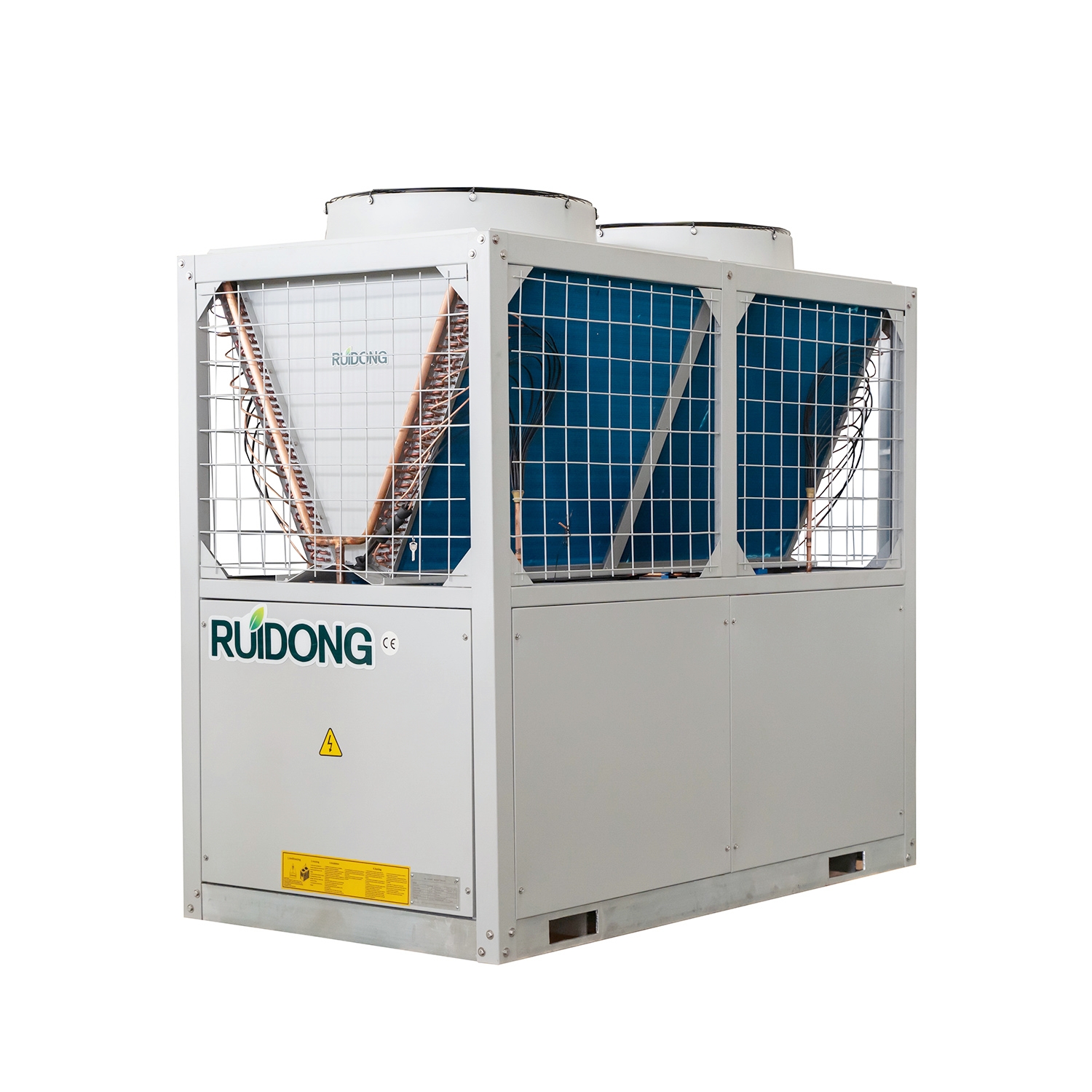
A heat pump is a device that transfers heat from one location to another, offering both heating and cooling capabilities depending on the system’s mode of operation. When combined with air cooled chillers, heat pumps provide a flexible HVAC solution that can adjust to seasonal demands, ensuring optimal comfort and operational efficiency throughout the year.
Integrating a heat pump with an Air Cooled Scroll Chiller allows a facility to use the same system for cooling in summer and heating in winter. This dual functionality reduces the need for separate boilers or auxiliary heating equipment, lowering energy consumption and operational costs. Furthermore, modern heat pumps can be controlled via intelligent building management systems to optimize energy usage based on occupancy, outdoor conditions, and electricity tariffs.
Energy Savings: By using one system for both cooling and heating, energy consumption is optimized, and operational costs are reduced.
Sustainability: Lower reliance on fossil fuels for heating reduces greenhouse gas emissions and environmental impact.
Space Efficiency: Eliminates the need for additional heating equipment, freeing up valuable indoor space for other purposes.
Operational Flexibility: Heat pumps can be programmed for dynamic operation, supporting varying load requirements throughout the day.
Scroll compressors operate with minimal energy loss, providing significant cost savings for businesses. When integrated with heat pump technology, the system can recover and reuse energy for heating, further improving overall efficiency. Many air cooled scroll chillers are designed to operate at part-load conditions efficiently, which is crucial for facilities where cooling demands fluctuate throughout the day.
Air cooled scroll chillers do not require cooling towers or extensive water infrastructure, allowing them to be installed outdoors or in tight spaces. This is particularly valuable in urban environments or retrofitted buildings. Rooftop installations are also feasible, making them a practical choice for commercial complexes without dedicated mechanical rooms.
The absence of water-based components simplifies installation and reduces labor and maintenance costs. Fewer moving parts mean less frequent servicing and lower risk of component failure. Maintenance schedules are simplified, and many manufacturers provide remote monitoring tools to anticipate potential issues before they impact operations.
Many manufacturers offer modular air cooled scroll chiller units that can be expanded as cooling demands increase. This flexibility supports future growth and ensures that systems remain effective as facility needs evolve. Facilities can start with a smaller installation and incrementally add units, minimizing upfront investment while maintaining reliability.
Air cooled systems consume less water and often use environmentally safe refrigerants, contributing to greener building operations. Reducing water usage also helps businesses comply with environmental regulations in water-scarce regions. Additionally, lower energy consumption reduces carbon emissions, supporting corporate sustainability goals and regulatory compliance.
Reliable temperature control is critical for IT equipment. Air cooled scroll chillers maintain consistent cooling, preventing overheating and ensuring uninterrupted operation. Advanced controls allow real-time monitoring of server room temperatures, avoiding costly downtime.
Industrial processes often require precise temperature control for optimal production. Air cooled chillers provide consistent cooling that supports quality and efficiency, whether for plastics molding, chemical processing, or electronics assembly.
Employee comfort and productivity are directly influenced by indoor climate. Air cooled scroll chillers with heat pumps maintain ideal temperatures and air quality throughout large office complexes, contributing to employee well-being and operational efficiency.
Hospitals, clinics, and laboratories require stable cooling for both patient care and sensitive medical equipment. These chillers offer dependable performance, ensuring safety and compliance with industry standards, even under critical load conditions.
Hotels, shopping malls, laboratories, and food processing units benefit from air cooled systems due to their reliability, low maintenance requirements, and scalable design. Their energy efficiency also supports corporate sustainability goals, reducing operational costs and improving environmental performance.
Installation Cost: Air cooled systems generally require lower upfront investment due to simpler infrastructure.
Space Requirements: Air cooled chillers save indoor space and eliminate the need for cooling towers.
Maintenance: Fewer components translate to reduced maintenance schedules and costs.
Performance in High-Temperature Environments: Water-cooled systems may offer slightly higher efficiency in extremely hot climates, but modern air cooled units are engineered to perform reliably across a wide temperature range.
Water Consumption: Air cooled chillers use minimal water, making them ideal for regions facing water scarcity and helping facilities meet sustainability targets.
Air Cooled Chillers, especially Air Cooled Scroll Chillers with integrated Heat Pump technology, offer an efficient and reliable solution for modern industrial and commercial HVAC needs. Their energy-efficient operation, compact design, and lower installation and maintenance costs make them ideal for data centers, manufacturing plants, offices, and healthcare facilities. By adopting these systems, businesses can enjoy flexible, scalable cooling and heating solutions while reducing energy expenses and supporting sustainability goals. The combination of scroll compressors and heat pump integration ensures both operational efficiency and environmental benefits. For tailored HVAC solutions, expert guidance, or more information on Air Cooled Chillers, contact Ruidong Group today and discover how their advanced systems can enhance comfort, efficiency, and sustainability in your facility.