Views: 88 Author: Site Editor Publish Time: 2026-05-14 Origin: Site


A fan coil unit is a common terminal device in hydronic HVAC systems used in residential, industrial, and commercial buildings. It conditions indoor air by moving room air across a chilled-water or hot-water coil, then returning treated air to the space. When selecting a fan coil unit, the most important factors are usually type, airflow, and capacity, because these three points directly influence comfort, efficiency, installation fit, and long-term operation.
A suitable fan coil unit should not be chosen by nominal capacity alone. The selected fan coil unit must also suit the building layout, occupancy pattern, noise expectations, maintenance access, and drainage conditions. Concealed fan coil units, floor/ceiling fan coil units, and cassette fan coil units all have different strengths, and the best result comes from matching the right fan coil unit to the actual project environment.
● The right fan coil unit should match building layout, airflow demand, and room load.
● Concealed fan coil units, floor/ceiling fan coil units, and cassette fan coil units suit different project conditions.
● Airflow and capacity should be selected together for stable comfort and efficient operation.
● A commercial or industrial fan coil unit should also be reviewed for drainage, controls, noise, and maintenance access.
● In residential, industrial, and commercial buildings, a well-chosen fan coil unit supports better long-term HVAC performance.
A fan coil unit draws room air through a filter and across a water coil, then sends the conditioned air back into the room. Because it operates at zone level, it allows localized cooling or heating in different spaces. In practice, performance depends not only on capacity, but also on airflow, coil condition, water temperature, and control response.
A fan coil unit is commonly installed in apartments, offices, hotels, retail spaces, technical rooms, and other conditioned areas. In residential buildings, it is often chosen for compact comfort control, while in commercial and industrial settings it is valued for zoning flexibility. The most suitable type depends on room layout, ceiling conditions, and maintenance needs.
A poorly chosen fan coil unit can lead to weak airflow, uneven temperatures, excess noise, or difficult maintenance, even if the rated output appears sufficient on paper. Once the unit is installed inside ceilings or finished interiors, correcting the wrong selection can become costly. Careful selection improves both day-to-day comfort and long-term operating stability.

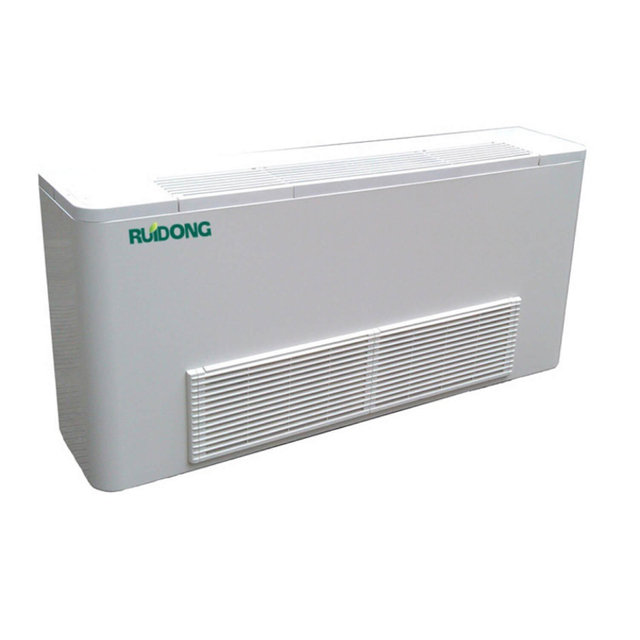
Concealed fan coil units are installed above ceilings or inside hidden service spaces, making them a good choice where a clean interior appearance matters. This type works well in hotels, offices, and apartments, but it requires proper service access and dependable drainage planning. Airflow also needs close attention, since duct resistance or grille arrangement can affect actual performance.
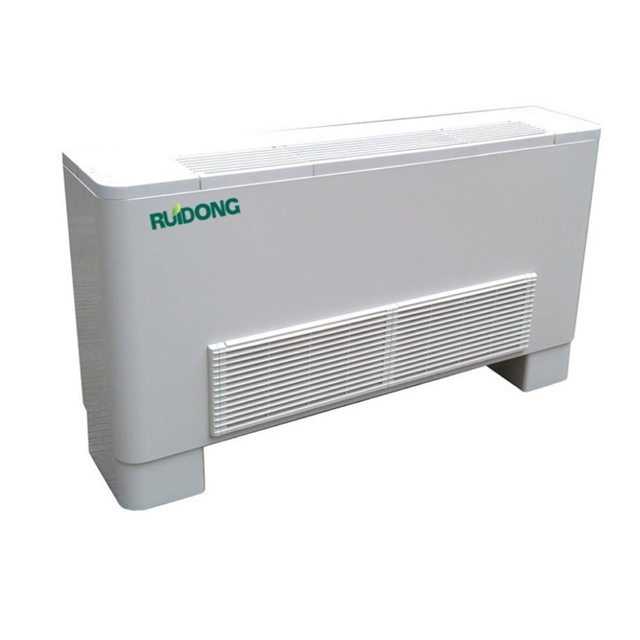
Floor/ceiling fan coil units are installed in visible locations and are often selected where easier maintenance access is preferred. This type of fan coil unit is practical for offices, schools, retrofit spaces, and public buildings. Because the unit remains exposed, noise level, air throw, and placement within the room should all be reviewed carefully.
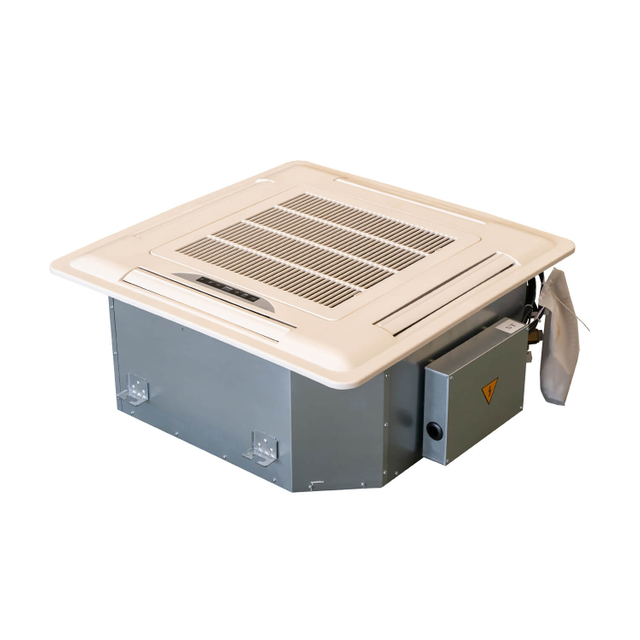
Cassette fan coil units are mounted in suspended ceilings and typically discharge air in multiple directions. They are commonly used in open commercial spaces where broad, even air distribution is required. Before selecting this type, ceiling height, drainage reliability, and discharge balance should all be considered.
The right fan coil unit type depends on layout, visibility requirements, service access, and air distribution needs. A concealed fan coil unit may suit premium interiors, a floor/ceiling model may work better where simple access is important, and a cassette fan coil unit may fit open-plan areas. The best choice comes from matching the unit to actual installation conditions rather than relying on preference alone.
Capacity should be matched to the actual room load, including occupancy, lighting, solar gain, and operating schedule. If a fan coil unit is undersized, it may run continuously without reaching the desired condition, while an oversized unit may operate less efficiently. Capacity should therefore be reviewed against real project conditions, not catalog values alone.
Airflow determines how effectively a fan coil unit delivers treated air across the occupied zone. Even if coil capacity is sufficient, performance can still suffer when airflow is weak, uneven, or overly aggressive. In concealed fan coil units, duct resistance is important, while in cassette and floor/ceiling fan coil units, throw pattern and draft risk deserve close attention.
The efficiency of a fan coil unit is influenced by coil design, fan performance, airflow resistance, and control behavior. A poorly matched unit may use more energy even if its listed specifications seem competitive. In many cases, correct selection of type, airflow, and capacity has a greater impact on real operating efficiency than a simple product-to-product comparison.
The filter inside a fan coil unit affects both indoor cleanliness and coil condition. When filtration is weak or maintenance is neglected, airflow can drop and hygiene can decline over time. For that reason, filter accessibility is an important part of selecting the right unit.
Noise matters wherever a fan coil unit operates close to occupied spaces such as offices, meeting rooms, apartments, or hotel rooms. Fan speed, air velocity, casing design, and installation quality all shape how the unit sounds in real use. Good acoustic performance usually comes from balanced selection rather than simply choosing the highest output.
A fan coil unit should be easy to inspect, clean, and service throughout its operating life. Concealed fan coil units need realistic service hatches, while floor/ceiling fan coil units and cassette fan coil units need clear access to filters, coils, and drains. If maintenance is inconvenient, long-term performance is more likely to decline.
Fan Coil Unit Type | Best Application | Main Strength | Main Limitation |
Concealed fan coil unit | Hotels, offices, apartments | Clean appearance | Access planning required |
Floor/ceiling fan coil unit | Schools, retrofit spaces, offices | Easy maintenance | Visible in room |
Cassette fan coil unit | Open commercial spaces | Wide air distribution | Drainage and ceiling coordination |
The size of a fan coil unit should be based on room load rather than floor area alone. Occupancy density, lighting, and equipment loads can significantly affect the required capacity. This is especially important in commercial and industrial buildings where room use may change throughout the day.
Room volume and ceiling height influence how a fan coil unit distributes air. A ceiling-mounted or cassette fan coil unit may need stronger or more targeted airflow in taller spaces. For concealed fan coil units, the full return and supply air path should be reviewed during selection.
A perimeter fan coil unit often faces higher cooling demand because of glazing and sunlight exposure. If solar gain is overlooked, the unit may underperform during peak daytime periods. As a result, different rooms within the same building may need different fan coil unit specifications.
Climate affects both the capacity needs and drainage demands of a fan coil unit. In hot, humid regions, the unit may run longer and handle more condensate. Extended operating hours also make filter condition, fan durability, and control stability more important.
Selection Factor | What to Review | Risk If Ignored |
Capacity | Room load and water conditions | Weak output or oversizing |
Airflow | Air volume and distribution path | Drafts or uneven comfort |
Installation type | Space, layout, access | Coordination problems |
Drainage | Pan, slope, discharge route | Leakage and odor |
Noise | Fan speed and air velocity | Occupant complaints |
Maintenance | Filter and service access | Performance decline |
Even a well-selected fan coil unit can become problematic if service access is too limited. Filters, coils, fans, and drains all require periodic inspection and cleaning. A unit that cannot be maintained easily is more likely to lose efficiency and reliability over time.
The performance of a fan coil unit also depends on correct piping, valve arrangement, control logic, and condensate drainage. A technically suitable unit may still perform poorly if the drain slope is wrong or the controls are not properly matched to the room. Good installation quality is therefore part of selecting the right fan coil unit.
A fan coil unit performs better when maintenance intervals are planned according to site conditions. In commercial and industrial buildings, dust load and long operating hours may call for more frequent service than in residential applications. Regular attention to filters, coils, fans, and drains helps keep the unit closer to its intended condition.

Choosing the right fan coil unit requires more than comparing catalog capacity. Type, airflow, capacity, noise, drainage, and maintenance access all influence how the fan coil unit performs in residential, industrial, and commercial buildings. Concealed fan coil units, floor/ceiling fan coil units, and cassette fan coil units can all deliver effective results when matched correctly to room load and installation conditions.
A well-selected fan coil unit supports more stable comfort, cleaner operation, and lower risk of long-term service problems. For projects reviewing hydronic HVAC configurations and technical options, Ruidong Group Co., Ltd provides related fan coil unit information for different application needs.
Choose a fan coil unit based on room load, airflow requirement, installation type, maintenance access, and control compatibility. A commercial fan coil unit should also be checked for drainage and noise performance. Correct selection comes from balancing all these conditions together.
The correct fan coil unit size depends on occupancy, room area, solar gain, internal loads, and water-side conditions. A fan coil unit should be selected from actual load calculation rather than rough estimate only. Airflow should also be reviewed together with capacity.
The best fan coil unit type for office buildings depends on layout and ceiling design. Concealed fan coil units are common where a clean appearance is needed, while cassette fan coil units suit open-plan offices. Floor/ceiling fan coil units can be practical where maintenance access is a higher priority.