
Views: 0 Author: Site Editor Publish Time: 2025-12-16 Origin: Site


A fire damper is a passive fire protection device installed in the walls, ceilings, or ventilation ducts of buildings. Its core function is to block the spread of flames and smoke during a fire, ensuring the safety of personnel evacuation and the integrity of the building structure. Widely used in large buildings such as office buildings and factories, statistics show that buildings equipped with fire dampers can reduce the fire spread rate by 30%. More than 68% of commercial buildings in the United States and over 63% of new buildings worldwide are mandatorily installed in accordance with safety regulations.
Its core value lies in: automatically closing through heat induction, maintaining the integrity of fire separation components, gaining crucial time for personnel evacuation and fire rescue, and serving as a core part of the building fire protection system.
Fire dampers do not require electrical power and achieve automatic operation relying on a heat induction mechanism. The core process consists of three steps:
1. Heat Induction Trigger: When the air temperature in the duct reaches a threshold between 70°C and 280°C, the device initiates the closing procedure. This temperature setting avoids false triggers and ensures a rapid response during a fire.
2. Fusible Link Linkage: The fusible link is the core triggering component, composed of two metal pieces connected by heat-sensitive solder. It keeps the damper blades open at normal temperature; when the set temperature is reached, the solder melts, releasing the damper blade closing mechanism. Common materials include brass, fusible alloys, and eutectic alloys, all of which possess precise temperature control characteristics.
3. Automatic Closing Execution: After the fusible link melts, mechanical springs or thermo-disc mechanisms drive the damper blades to close quickly, unaffected by power outages or air flow in the duct. Once closed, it forms a sealed barrier, blocking the spread of flames and smoke through the duct.
1. Fusible Link: The core of temperature control triggering, with a precisely calibrated melting point (commonly 70°C or 280°C). Its integrity must be regularly inspected, as damage can directly lead to device failure.
2. Damper Blades: Classified into curtain-type (suitable for small/horizontal ducts), pivoting-type (suitable for large openings), and sliding-type (adapting to various duct shapes). Made of galvanized steel or fire-resistant alloys, some are equipped with heat-expandable gaskets to enhance closing force and sealing performance.
3. Housing and Frame: Constructed from steel, stainless steel, or corrosion-resistant steel. Some models use 22-gauge galvanized steel, featuring high-temperature resistance and rust resistance to ensure structural stability during a fire.
4. Sensing System: Modern fire dampers are equipped with mechanical position sensors (monitoring opening and closing status), electronic temperature sensors (real-time temperature control), smoke detection sensors (linking with smoke alarms), and data transmission modules to achieve status monitoring and abnormal early warning.
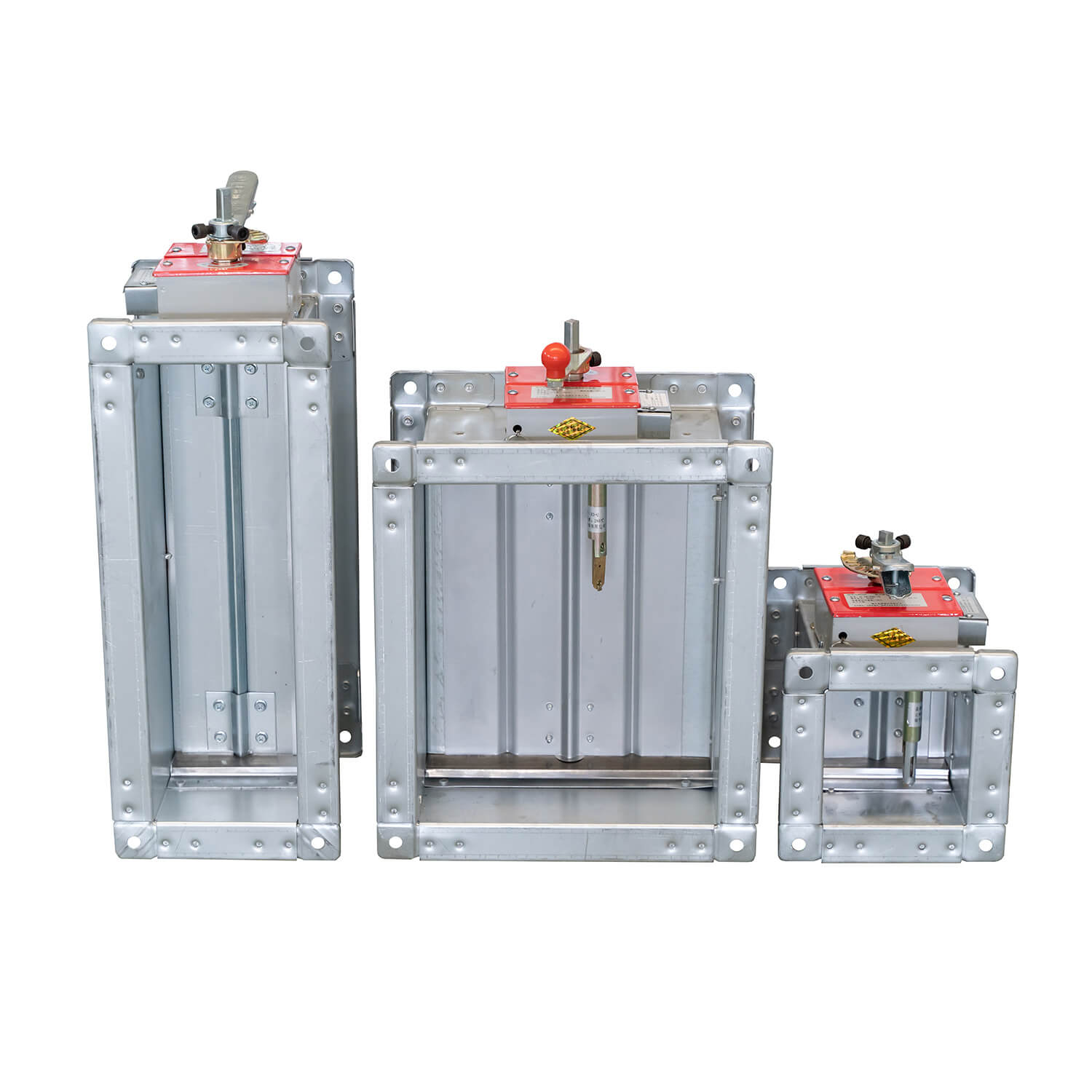
Type | Structural Features | Application Scenarios | Core Advantages | Limitations |
Curtain-Type Fire Damper | Gravity-driven curtain blades | Small offices/residential buildings, simple ventilation systems | Low cost, easy installation and maintenance, low air flow resistance | Single function, not suitable for complex scenarios |
Blade-Type Fire Damper | Multiple rotating blades + mechanical springs | Large buildings, industrial facilities | High opening and closing reliability, easy inspection and maintenance, can be equipped with position switches | Only suitable for passive fire protection, traditional appearance |
Dual-function sealed structure + smoke induction | New buildings, hospitals, large public buildings | Blocks both flames and smoke, meets UL dual standards | Higher cost, needs to be matched with smoke detection systems |
Installation Location | Installation Requirements | Function |
Duct Penetrations | Passing through walls/floors with a fire resistance rating of 2 hours or more | Maintain the integrity of fire separation |
Air Handling Units (AHUs) | Front and rear ends of the unit | Protect the fire safety of the HVAC system |
Kitchen Exhaust Systems | Key nodes of exhaust ducts | Block the spread of kitchen fires |
Stairwells/Elevator Shafts | Ducts passing through the shafts | Ensure the safety of evacuation routes |
Hazardous Areas | Ventilation ducts of high-risk spaces such as chemical storage rooms | Isolate fire risks in high-risk areas |
1. Strictly comply with the International Building Code (IBC), International Fire Code (IFC), and UL 555 standards to ensure matching with fire separation components.
2. For 1-hour fire separation components, fully ducted HVAC systems may be exempt from installation (excluding vertical shafts); during installation, the valve body must be closely attached to the wall, and gaps filled with fire-rated caulk.
3. Reserve maintenance space for later inspection and testing. Acceptance testing must be completed and recorded after installation.
Inspection Type | Implementation Standard | Cycle Requirements |
Operational Testing | NFPA 80 | Immediately after installation |
Acceptance Testing | NFPA 80/BS 9999 | After installation, before commissioning |
Periodic Inspection | NFPA 80 | 1 year after the initial test, then every 4 years (Once every quarter for hospitals) |
Annual Maintenance | BS 9999 | Comprehensive inspection once a year |
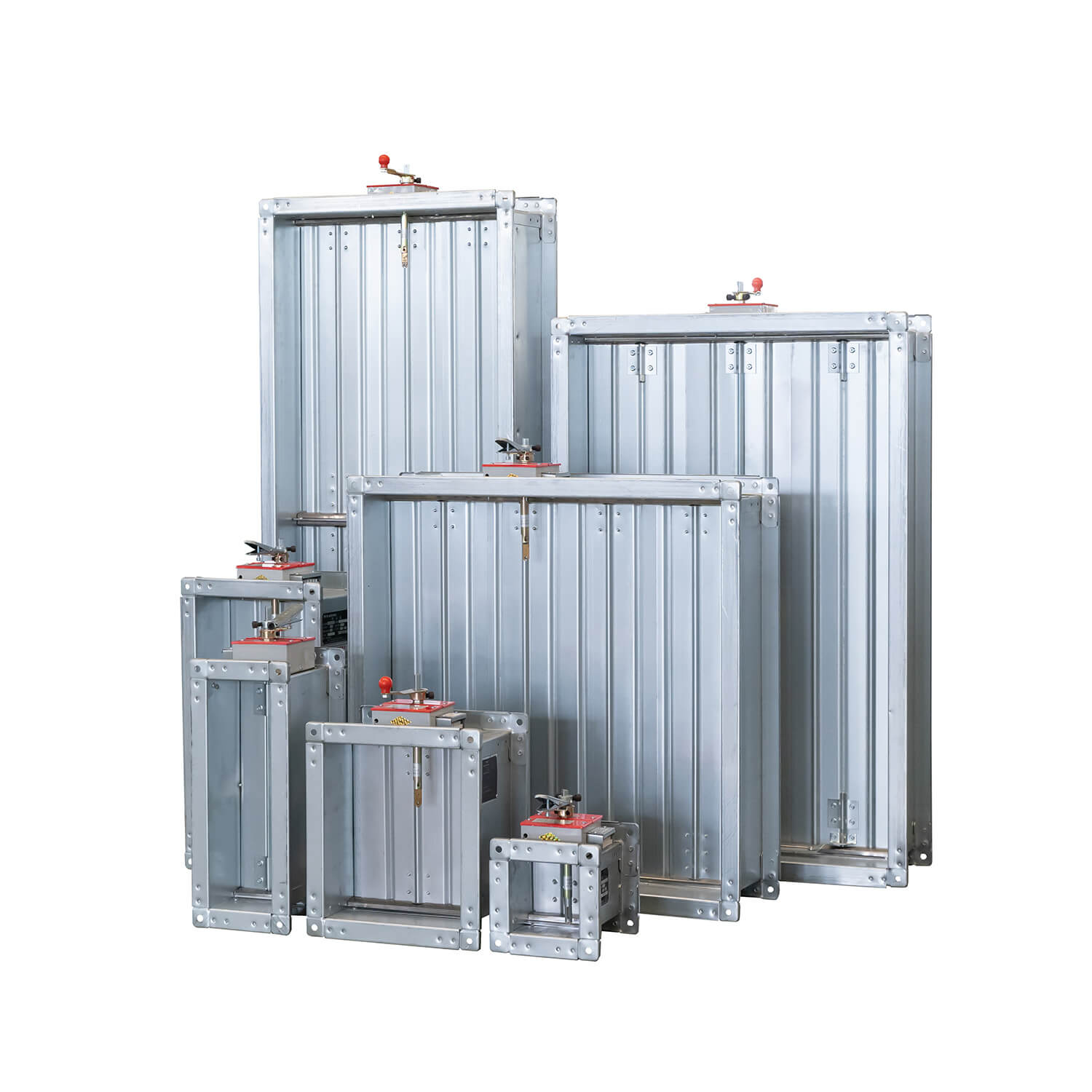
1. Routine Maintenance: Clean internal and external dirt, inspect the integrity of seals, lubricate bearings, and test the flexibility of mechanical closing mechanisms.
2. Component Replacement: Timely replace aging fusible links, rusted components, and faulty sensors.
3. Common Problem Handling: Address insufficient inspection frequency, component damage, misalignment during installation, and valve body blockage, and establish a complete asset account.
Standard Number | Scope of Application | Core Requirements |
NFPA 80 | Installation and maintenance of fire dampers | Mandatory periodic inspection to ensure effective operation during fires |
NFPA 105 | Cross maintenance of smoke and fire dampers | Unified maintenance standards to avoid functional conflicts |
UL 555 | Product certification of fire dampers | Products must pass fire performance tests |
AMCA 500-D | Performance testing | Performance verification for different working conditions |
EN15650:2010 | European product standards | Mandatory requirement for market access in Europe |
1. Legal Liability: Violations of building codes may result in fines, and corresponding legal liabilities shall be borne in the event of a fire.
2. Insurance Risks: Insurance companies may refuse compensation for fire losses caused by non-compliance with regulations.
3. Safety Hazards: Device failure will lead to the rapid spread of fire, increasing casualties and property losses.
Benefit Type | Specific Indicators |
Loss Control | 40% reduction in fire-related losses |
Operational Security | 35% reduction in business interruption time |
Cost Optimization | Significant reduction in long-term maintenance costs and avoidance of compliance fines |
1. Installation Qualifications: Must be installed by professional and technical personnel to ensure compliance with regulatory requirements; non-professional installation will lead to functional failure.
2. Inspection and Judgment: Verify the device status by manually testing the integrity of opening and closing, or checking sensor data through the control system.
3. Special Scenarios: For hospitals and other special-purpose buildings, the inspection interval must be shortened to once every quarter, and a comprehensive maintenance and performance test must also be carried out annually.
4. Impact of Failure: If the damper blades fail to close, flames and smoke will quickly spread through the duct, damaging fire compartments and exacerbating disaster consequences.
1. Select products certified by authoritative organizations such as UL and EN, and verify certification documents before installation.
2. Establish a complete maintenance account, recording inspection data, component replacement, and fault handling results.
3. Select the appropriate type based on building usage and fire rating to avoid over-functionality or insufficiency.
4. Conduct regular emergency drills to verify the coordination between fire dampers and the overall fire protection system.