Views: 0 Author: Site Editor Publish Time: 2025-12-29 Origin: Site


(1) Building Scale and Space Requirements
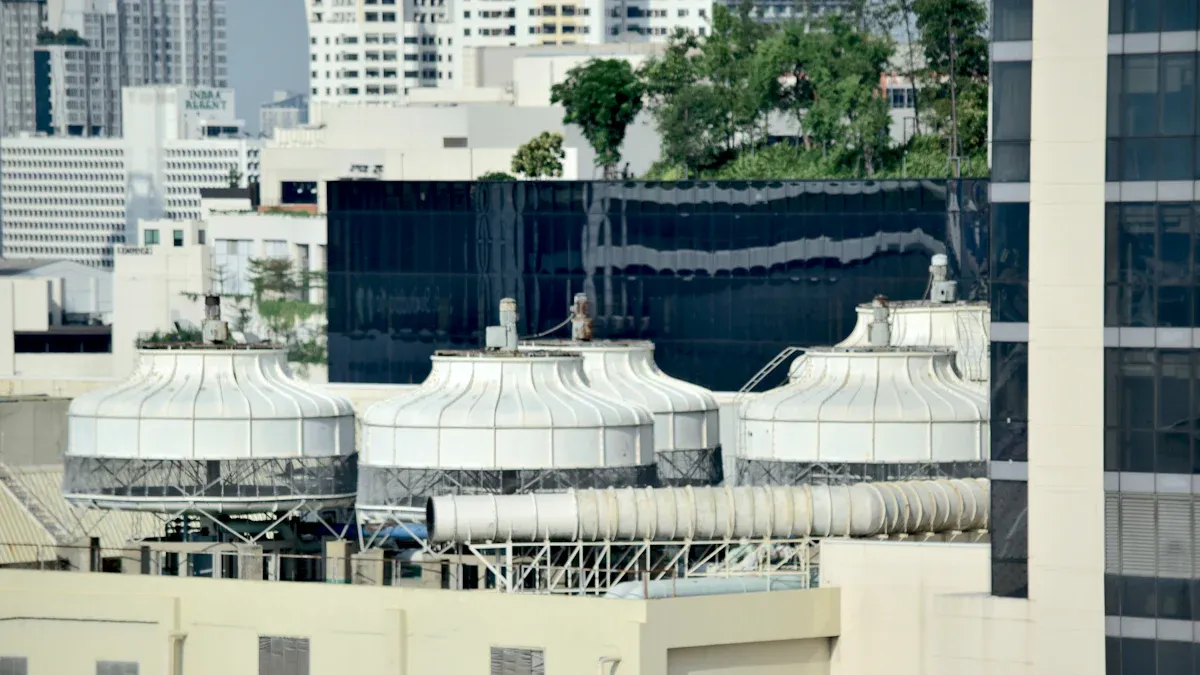
Water-Cooled Chiller: Suitable for large-scale cooling scenarios such as large commercial buildings, factories, and data centers. In 2024, its adoption rate in commercial buildings reached 59.5%. It requires indoor space for the main unit and outdoor area for the cooling tower (approximately 1.5 square feet per ton), resulting in higher overall space demand.
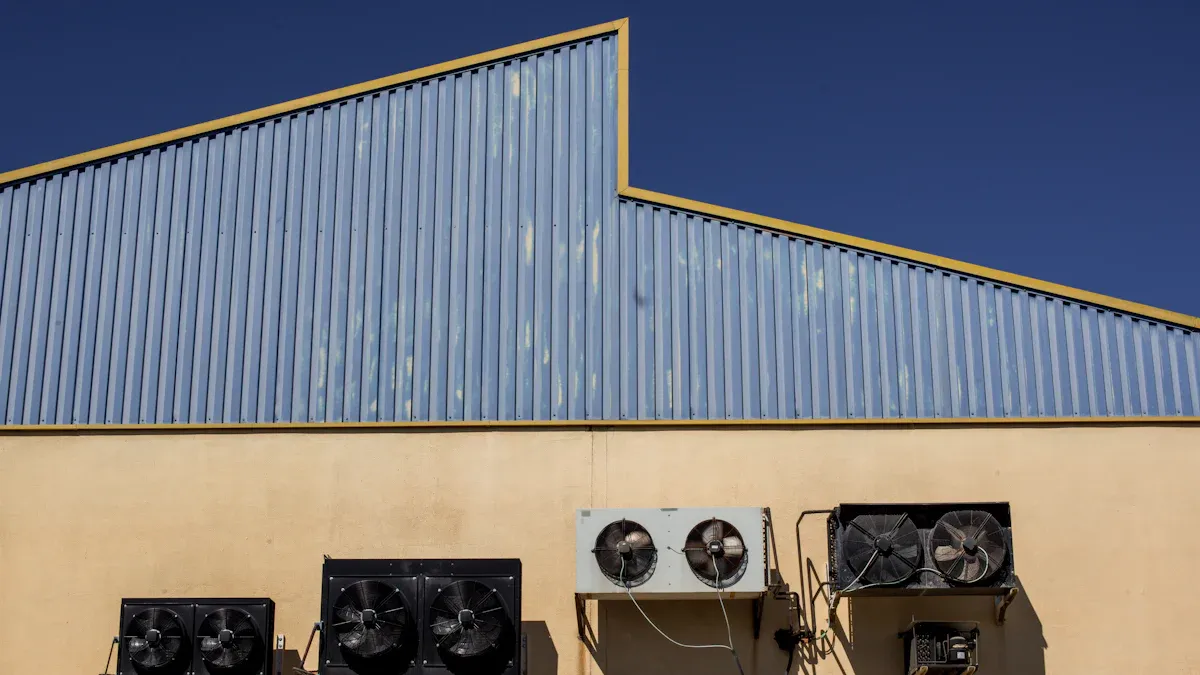
Air-Cooled Chiller: Ideal for small offices, shops, and medium-sized enterprises. It can be directly installed outdoors without the need for a cooling tower. A clearance of 4-6 feet around the unit is required for ventilation, effectively saving indoor space.
(2) Climate and Water Availability
Type | Suitable Climate | Water Requirement | Performance at High Temperatures (>40°C) |
Water-Cooled Chiller | Hot and humid regions | Continuous and stable water supply | Stable performance with no significant efficiency degradation |
Air-Cooled Chiller | Mild and cool regions | No water required for cooling | Significant efficiency drop and insufficient cooling capacity |
(3) Cost and Maintenance Considerations
Dimension | Water-Cooled Chiller | Air-Cooled Chiller |
Initial Investment | Higher (includes cooling tower, water pumps, and other auxiliary equipment); a 1200RT model costs approximately $128,000 more than an air-cooled chiller of the same capacity | Lower; no additional cost for auxiliary equipment |
Operating Cost | Lower; significant energy-saving advantages lead to long-term operational savings | Higher; energy consumption further increases in high-temperature environments |
Maintenance Requirement | Complex; regular water treatment (to prevent scaling and corrosion) is necessary, requiring professional technicians | Simple; only coil cleaning and filter replacement are needed, which can be performed by general technicians |
Service Life | 20-30 years (protected from outdoor weather conditions) | 15-20 years (fans and other components are prone to environmental wear) |
(1) Core Performance Indicators
Performance Dimension | Water-Cooled Chiller | Air-Cooled Chiller |
Energy Efficiency Level | High COP value (4.10-4.60 for screw-type, 4.40-5.10 for centrifugal-type), stable under heavy load | Lower COP value; efficiency decreases in high temperatures; up to 14.1% electricity savings in subtropical climates with smart controls |
Noise Level | 60-70dB (installed indoors, quiet operation) | 70-80dB (installed outdoors, significant noise from fans) |
Cooling Load Adaptability | Suitable for high-load and continuous cooling needs | Limited to small and medium loads; multiple units in parallel required for large spaces |
(2) Working Principles and Core Components
Water-Cooled Chiller
Working Principle: The refrigerant absorbs heat from the building, the condenser transfers the heat to the circulating water, and the cooling tower releases the heat to the atmosphere, forming a closed-loop cooling cycle.
Core Components: Compressor (drives refrigerant circulation), condenser (core heat exchange component), cooling tower (heat dissipation terminal), evaporator (heat absorption component), water pumps, and pipelines (water circulation carriers).
Air-Cooled Chiller
Working Principle: After absorbing heat, the refrigerant exchanges heat with outdoor air through the condenser coils, and fans accelerate heat dissipation, eliminating the need for a water circulation system.
Core Components: Compressor, condenser coils, cooling fans, and evaporator. The structure is compact with no additional auxiliary equipment.
(1) Water-Cooled Chiller
Advantages: High energy efficiency, quiet operation, long service life, suitable for all climates, and particularly stable performance in hot and humid environments.
Disadvantages: High initial investment, complex maintenance, strong dependence on water resources, and subject to water supply restrictions and relevant regulatory constraints.
(2) Air-Cooled Chiller
Advantages: Simple installation, low initial cost, easy maintenance, no water requirement, and suitable for temporary cooling and space-constrained scenarios.
Disadvantages: Poor efficiency in high temperatures, high noise levels, short service life, and inability to meet high-load cooling needs of large buildings.
(1) Typical Applications of Water-Cooled Chillers
Large Buildings: High-rise office buildings, hospitals, data centers, and large commercial complexes;
Industrial Fields: Pharmaceutical production, food cooling, petrochemical processing, plastic manufacturing, metal plating, and other scenarios requiring stable temperature control;
Climate Zones: Tropical and subtropical hot and humid regions, or cold regions with abundant water resources (can utilize free cooling in winter).
(2) Typical Applications of Air-Cooled Chillers
Small and Medium-Sized Venues: Small offices, shops, schools, and small factories;
Special Conditions: Water-scarce regions (e.g., the Middle East, Hong Kong) and urban buildings with limited outdoor space;
Temporary Needs: Replacement cooling during equipment maintenance and short-term cooling for temporary event venues.
(1) Energy Efficiency Standards
Standard Name | Core Requirements |
ISO 5151 | Specifies test methods for chiller cooling capacity and energy consumption |
ASHRAE 90.1 | Defines energy efficiency thresholds for building HVAC systems |
EN 378 | Covers safety, energy efficiency, and environmental requirements in Europe |
HFC Regulation | Restricts the use of refrigerants with high environmental impact |
(2) Minimum Energy Efficiency Requirements
Equipment Type | Energy Efficiency Indicators |
Water-Cooled Positive Displacement (<75 Tons) | ≤0.750 kW/ton, ≤0.600 IPLV |
Water-Cooled Centrifugal (≥300 Tons) | ≤0.560 kW/ton, ≤0.500 IPLV |
Air-Cooled Single-Effect Absorption | ≥0.600 COP |
(3) Water Resource Compliance
Water-cooled chillers must comply with local water use regulations; closed-loop water circulation systems are required in water-scarce areas.
Air-cooled chillers do not require water for cooling, making them suitable for regions with water restrictions or strict water-saving policies.
(1) Standard Selection Steps
Clarify Cooling Needs: Determine cooling capacity, temperature range, and operating hours;
Evaluate Basic Conditions: Building scale, installation space, water supply, and climate characteristics;
Compare Core Indicators: Energy efficiency, initial and long-term costs, and maintenance difficulty;
Compliance Verification: Ensure the equipment meets local energy and water resource regulations;
Professional Consultation: Collaborate with HVAC experts to validate selection rationality.
(2) Common Pitfall Avoidance
Ignoring Load Matching: Avoid over-sizing or under-sizing leading to energy waste or insufficient cooling;
Confusing Climate Adaptability: Blindly selecting air-cooled chillers in hot regions or water-cooled chillers in water-scarce areas;
Focusing Only on Initial Cost: Overlooking the long-term energy-saving cost advantages of water-cooled chillers;
Omitting Maintenance Planning: Failing to reserve resources for water treatment and professional maintenance of water-cooled chillers;
Improper Installation Location: Installing air-cooled chillers in poorly ventilated areas or failing to plan space for cooling towers of water-cooled chillers.
(1) Core Difference: Water-cooled chillers rely on water and cooling towers for heat dissipation, offering high efficiency but complex systems; air-cooled chillers use fans and outdoor air for heat dissipation, featuring simple installation but poor high-temperature performance.
(2) Service Life: Water-cooled chillers last 20-30 years, while air-cooled chillers last 15-20 years. The difference stems from the impact of outdoor environments on components.
(3) Maintenance Intensity: Air-cooled chillers have low maintenance requirements, only needing basic cleaning; water-cooled chillers require regular water treatment and professional inspections.
(4) Suitability for Arid Regions: Water-cooled chillers are not recommended; air-cooled chillers are the optimal choice.
(5) Feasibility of Indoor Installation: Air-cooled chillers require sufficient ventilation and can only be installed outdoors; the main unit of water-cooled chillers is installed indoors.
(6) Cost Difference: Water-cooled chillers have a 30%-50% higher initial investment but 15%-30% lower long-term operating costs due to energy efficiency advantages.