Views: 0 Author: Site Editor Publish Time: 2025-12-23 Origin: Site


Plan 1 saves between 61.4% and 64.7% energy
Plan 2 saves between 62.1% and 65.6% energy
If you know each water cooled chiller component, you can use and take care of your equipment better.
Water-cooled chillers have seven main parts. These are the compressor, condenser, evaporator, expansion valve, power panel, controls unit, and water box. Knowing these parts helps you use and take care of your system well.
The compressor is very important. It moves refrigerant through the system. It squeezes gas to make pressure. This helps the cooling process work.
The condenser takes heat away from the refrigerant. It changes the refrigerant from gas to liquid. This step is needed for good cooling and saving energy.
The evaporator takes in heat from water. This cools the water down. Knowing how it works helps keep your building at the right temperature.
The expansion valve controls how much refrigerant goes into the evaporator. This makes sure the cooling works well and saves energy.
Doing regular checks, like cleaning tubes and testing safety devices, stops breakdowns. It also helps your chiller last longer.
Using variable speed pumps can save energy. They also keep water flowing right. This makes your chilled water system work better.
Knowing how each part works together helps you fix problems faster. It also helps you make better choices when changing your system.
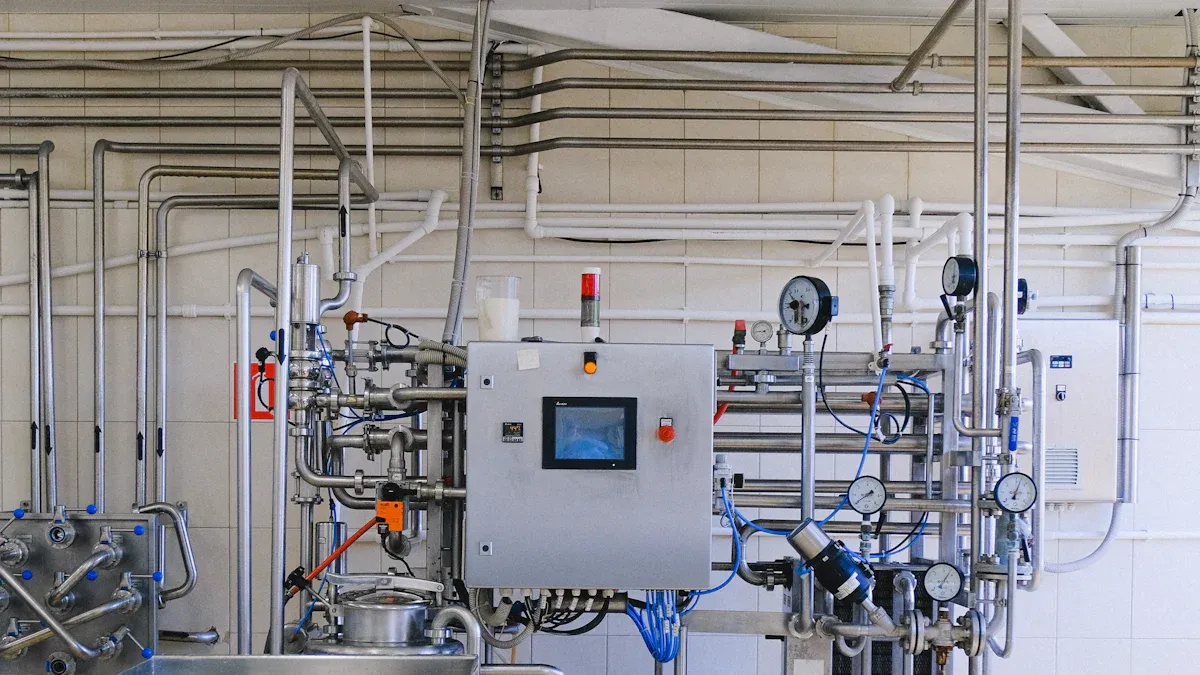
The compressor is in the middle of every water-cooled chiller. It gives power to the system and keeps things working. The compressor pulls in refrigerant gas that is cold and not under much pressure. It squeezes this gas to make it hot and under high pressure. This step is needed so the refrigerant can move through the chiller parts and help cool things down.
The compressor makes a pressure difference so the refrigerant can move. It sits between the evaporator and condenser. This helps the water cooled chiller work well.
There are different types of compressors in water cooled chillers. The most common ones are:
Scroll compressors: These are good for small and medium chillers. They are quiet and work well.
Screw compressors: These are used in bigger chillers. They can handle more work and save energy.
Centrifugal compressors: These are for very big systems. They spin fast to squeeze the refrigerant and are best for large cooling jobs.
Each type helps move the refrigerant through the chiller parts.
The condenser is another important part in water-cooled chillers. It takes heat from the refrigerant after the evaporator and condenser finish their jobs. The condenser moves this heat to water in the condenser loop. The cooling tower then gets rid of the heat from the building.
The condenser takes heat from the refrigerant vapor and turns it into a liquid. This step is needed for cooling and helps the chiller run well.
Here is a simple list of what the condenser does:
Takes away extra heat from the refrigerant
Moves heat to water in the condenser loop
Sends heat out of the building with the cooling tower
Shell and tube condensers are often used in water-cooled chillers. You will see them in chillers from 200 kW to very big ones. These condensers are strong and last a long time. They keep heat transfer steady even if things change.
Material Type | Characteristics | Performance Impact |
|---|---|---|
Shell and Tube | Used in large chillers; strong and durable | Stable heat transfer; coefficient of 1,500-2,500 W/(m²-K) when clean |
Plate heat exchangers are another kind you might see in water-cooled chillers. They use thin plates, usually made of stainless steel, to move heat. They work well for chillers up to 500 kW. Copper brazed plates move heat well, but nickel plates are better for tough liquids.
Material Type | Characteristics | Performance Impact |
|---|---|---|
Stainless Steel AISI 316L | Thin plates; good for tough media; can use titanium | Quality of gasket or soldering affects efficiency and leakage risk |
Copper Brazed Plate | Soldered with copper or nickel; good for small chillers | Good heat transfer; nickel for aggressive liquids |
The evaporator is one of the main chiller parts. It takes heat from water, which makes the refrigerant turn into a gas. This step is what cools things down. The evaporator is made to help the refrigerant take in heat from water. This lowers the water temperature and helps with cooling.
The evaporator takes heat from around it, making the refrigerant turn into a gas. This process is needed to keep the right temperature in many places.
Here is what the evaporator does:
Takes heat from water
Makes refrigerant turn into a gas
Lowers water temperature for cooling
Flooded evaporators fill the shell with liquid refrigerant. This design lets the refrigerant touch all the heat transfer surfaces. Flooded evaporators are used in big water-cooled chillers.
Dry expansion evaporators use both gas and liquid refrigerant. The expansion valve controls the flow so no liquid builds up. These evaporators are good for smaller jobs and can work better with more flow.
Feature | Flooded Evaporator | Dry Expansion Evaporator |
|---|---|---|
Refrigerant State | Liquid fills the shell | Mix of gas and liquid enters |
Heat Transfer Efficiency | High, full contact with surface | Lower, can improve with more flow |
Operational Characteristics | High coefficient, good for big loads | Controlled by valve, no liquid accumulation |
Both types help with cooling, depending on the size and needs of your water-cooled chiller.
The expansion valve is very important in a water-cooled chiller. It controls how much refrigerant goes into the evaporator. This valve makes the refrigerant colder and lowers its pressure. That helps the system take in heat and cool water well.
The expansion valve lets the right amount of refrigerant enter the evaporator. This keeps the chiller working well and helps save energy.
Here is what the expansion valve does:
Controls how much refrigerant goes into the evaporator
Makes the refrigerant colder and lowers its pressure
Helps the system take in heat for cooling
Many chillers use thermostatic expansion valves, called TXVs. These valves have a sensor that checks the temperature. When the temperature changes, the valve opens or closes. This keeps the cooling steady. TXVs are easy to use and work well when cooling needs do not change fast.
Electronic expansion valves, or EEVs, give you more control. These valves use sensors and a controller to change the refrigerant flow very accurately. EEVs react quickly when the load or temperature changes. This helps the chiller work better.
Advantage | Description |
|---|---|
Wide Adjustable Temperature Range | EEVs can change temperatures between -35°C and 10°C with 500 steps. |
Simplified Installation | Built-in EEVs are easy to install and do not need extra setup. |
Enhanced Energy Efficiency | EEVs help save energy and make the system work better. |
Improved Reliability and Longevity | Good control means less damage, so equipment lasts longer. |
Superior Cooling Performance | EEVs react fast to changes and keep things cool for stored goods. |
The power panel is the main part of the chiller’s electrical system. It helps control and protect the electricity flow. The power panel has many parts that keep the chiller safe and working.
Component | Role in Operation |
|---|---|
Power Unit | Sends electricity to the chiller. |
Circuit Breakers | Stop overloads and protect the system. |
Starters | Turn on the chiller. |
Speed Controller | Changes how fast the compressor works. |
Power Monitoring | Checks how well the chiller uses electricity. |
The power panel helps stop electrical problems and keeps the chiller safe. You can look at the panel to see if everything is working right.
The controls unit is like the chiller’s brain. It helps you watch and change how the system works. The controls unit helps the chiller work better and use less energy.
Chiller analytics check the whole cooling system and make sure water moves well.
Temperature monitoring helps you find problems when water is too hot or cold, which can waste energy.
Analytics can find cooling tower problems that make the chiller less efficient, so you can fix them fast.
Chilled water optimization helps save energy and keeps the building comfortable.
Advanced controls look at how parts work together and change settings to make things better.
Chiller sequencing and load balancing help the system run smoothly.
Controls also change condenser water temperature and pump speed to keep everything working right.
Control Strategy | Description |
|---|---|
Changes water temperature, flow, and number of pumps and chillers when outdoor conditions change. | |
Optimised Control Platform | Made for data centers to help save energy and keep things steady. |
Application of Thermodynamic Principles | Uses energy rules to make the chiller work better in different buildings. |
The controls unit helps you keep the chiller working well. You can use it to find problems early and make changes that save energy.
You will find the water box at the heart of your water-cooled chiller’s water flow system. The water box helps you control how water moves through the chiller. You can think of it as a guide that directs water to the right places inside the evaporator and condenser.
The water box makes sure water enters and leaves the chiller in the correct way. This keeps the cooling process smooth and efficient.
The water box does several important jobs:
It controls the flow of water in the system.
It separates the entrance from the exit in both the evaporator and condenser.
It helps you manage how many passes water makes through the chiller. More passes mean water travels back and forth inside the tubes, which can improve heat transfer.
You may see different water box designs. Some water boxes have one pass, so water flows straight through. Others have two or more passes, so water changes direction inside the box. The number of passes depends on how much cooling you need and how your system is set up.
Water Box Feature | What It Does | Why It Matters |
|---|---|---|
Controls Water Flow | Directs water through chiller tubes | Keeps cooling steady |
Separates Inlet/Outlet | Keeps entrance and exit apart | Prevents mixing of hot and cold |
Pass Design | Sets number of water passes | Affects heat transfer efficiency |
If you want your chiller to work well, you need a water box that matches your system’s needs. A good water box helps you get the most out of your cooling equipment. You can check the water box for leaks or blockages during routine maintenance. This helps you avoid problems and keeps your building comfortable.
Chilled water pumps are very important in these systems. They move cold water from the chiller to different parts of your building. The pump keeps water moving at the right pressure. This helps cool air where you need it.
Chilled water pumps keep water moving and keep pressure steady.
You can put a bypass between the chiller and the system. This lets you control water flow better and saves money. You do not need to make all pipes bigger for extra water.
The bypass valve must be the right size. It needs to let enough water through for the chiller to work well.
Variable speed pumps help save energy. These pumps can go faster or slower when needed. This means the pump does not waste energy by running too fast.
Component | Description |
|---|---|
Energy Savings Potential | Variable speed pumps can save up to 10% energy each year. |
Field Test Results | Tests show 15% energy savings over four days compared to regular pumps. |
Optimal Sequencing Strategy | The system uses data to pick the best number of pumps for your building. |
Variable speed pumps also help keep the right pressure. They use controls that change with valve positions or water temperature. This helps the system work well and use less energy.
The condenser water pump helps the chiller get rid of heat. It moves water from the chiller’s condenser to the cooling tower. You can use pumps that run at one speed or pumps that can change speed for better control.
The pump moves water through the condenser water loop.
Hot water goes from the chiller to the cooling tower.
The cooling tower takes heat from the water and lets it out into the air.
You need to watch how fast water moves. Most big systems use about 3 gallons per minute for each ton of cooling. Newer systems can use less, like 2 gallons per minute per ton. If you use 1.6 to 2.3 gallons per minute per ton, you can save money and use less energy.
Cooling towers help get rid of heat from your chilled water system. They use evaporative cooling to do this job. Water is sprayed inside the tower. Air moves through and some water turns into vapor. This takes heat away from the water.
Water is sprayed through nozzles and takes heat from the chiller.
Hot water goes to the top of the tower and spreads out. This gives more space for water to evaporate.
Air moves through the tower and some water evaporates. The rest of the water cools down.
The cool water collects at the bottom and goes back to the system to take in more heat.
There are different types of cooling towers. The most common are crossflow and counterflow towers. You might also see forced draft, induced draft, and factory assembled towers.
Crossflow cooling towers
Counterflow cooling towers
Forced draft cooling towers
Induced draft cooling towers
Factory assembled cooling towers
Cooling towers work with heat exchangers and pumps. They help your chilled water system run well. They make sure heat leaves your building so the chiller can keep things cool.
Heat exchangers are in almost every chilled water system. They move heat between two fluids but do not let them mix. This helps the system work well. Heat exchangers make sure water gets cooled or heated as needed.
Heat exchangers use refrigerants. The refrigerant takes in heat when it evaporates. It gives off heat when it condenses. The boiling point and heat capacity of the refrigerant affect how well the heat exchanger works. There are different ways fluids can flow in heat exchangers. Counterflow designs give a bigger temperature difference. This means better heat transfer. Parallel flow designs are also used, but they are not as good.
Heat exchangers help the chilled water system work well.
Counterflow designs often work better.
The refrigerant inside the heat exchanger is important for moving heat.
Heat exchangers help cooling towers by moving heat out of the system fast. This helps the chiller work better and saves energy. Picking the right heat exchanger makes your chilled water system work better.
Hydronic specialties are important parts like air separators and expansion tanks. These parts help your chilled water system stay safe and work well. Air separators take out air and gases from the system. This helps heat move better and stops problems from trapped air. Expansion tanks handle changes in water volume when the temperature goes up or down. They stop too much pressure from building up and protect your equipment.
Component | Function | Benefits |
|---|---|---|
Air Separators | Remove air and gases from the system | Help heat move better and stop air problems |
Expansion Tanks | Handle water expansion and contraction | Stop pressure buildup and help the system last longer |
Hydronic specialties are made from strong materials like carbon steel or stainless steel. They come in different sizes for your system. Many people use them because they last a long time and work well.
Hydronic specialties help your chilled water system work without problems.
Strong materials make these parts last.
You can pick the right size for your building.
Using hydronic specialties keeps your system safe and working well. These parts work with heat exchangers and cooling towers to keep everything balanced. If you check these parts during maintenance, you can stop breakdowns and keep your building comfortable.
You can understand how a water-cooled chiller works by looking at each step in the refrigeration cycle. The process starts with the compressor and moves through the main components. Each step helps the system cool your building or process.
Here is a simple table that shows the main steps:
Step | Description |
|---|---|
1. Compression | The compressor squeezes the refrigerant gas. This raises its temperature and pressure. |
2. Condensation | The hot, high-pressure gas moves to the condenser. It releases heat to the cooling water and turns into a liquid. |
3. Expansion | The liquid refrigerant passes through the expansion valve. Its pressure drops, and it gets colder. |
4. Evaporation | The refrigerant enters the evaporator. It absorbs heat from the water or air, turning into a gas. |
5. Return to Cycle | The low-pressure gas goes back to the compressor. The cycle starts again. |
Tip: If you follow these steps, you can see how each part of the chiller helps keep your building cool.
You will notice that the refrigerant changes from a gas to a liquid and back again. This change lets the system move heat out of your building. The cycle repeats over and over to keep things comfortable.
Each main component in your chiller has a special job. They work together to move heat and keep the system running smoothly. You can see how they interact in the table below:
Component | Role in Refrigeration Cycle |
|---|---|
Evaporator | Absorbs heat from the chilled water or process fluid. This gives you the cooling effect. |
Compressor | Raises the pressure and temperature of the refrigerant vapor. This helps release heat. |
Condenser | Rejects heat from the refrigerant vapor to the cooling water. This makes the refrigerant change back to a liquid. |
Expansion Device | Controls how much refrigerant flows and lowers its pressure. This prepares it for cooling. |
You can think of the evaporator as the part that takes heat away from your building. The compressor pushes the refrigerant through the system. The condenser gets rid of the heat, and the expansion device makes sure the refrigerant is ready to absorb more heat.
Note: If you understand how these components work together, you can spot problems faster and keep your chiller working well.
When you look at your chiller, you will see that each part depends on the others. If one part does not work, the whole system can lose efficiency. You can use this knowledge to help with troubleshooting and maintenance.
Control systems help your chiller work well. They let you watch and change many parts of the chiller. You can use them to save energy and keep things comfortable. They also help stop problems before they start.
Control systems check fans, pumps, valves, and temperature. There are different types of control systems in chillers. Each one helps you control a part of the system. The table below shows some common control systems and what they do:
Control System | What It Does |
|---|---|
Hydronic System Control | Runs cooling tower fans and valves for steady work. |
Building Management System (BMS) | Makes the central plant work better and saves energy. |
Programmable Logic Controller (PLC) | Automates controls for reliable chiller operation. |
Temperature Control Module | Keeps the chiller at the right temperature. |
Standard Temperature Controller | Gives basic temperature control from many brands. |
Chiller Plant Controller | Controls all chiller plant parts for best results. |
Tip: You can use a BMS to link your chiller to other building systems. This lets you see everything together and make fast changes.
Most chillers have temperature control modules. These keep water at the right temperature. PLCs help you automate jobs, so you do not need to change settings by hand. Chiller plant controllers let you control the whole system from one place. These tools help you keep your building cool and save money.
Safety devices keep your chiller safe from harm. They help protect your building too. You need these devices to stop problems before they get worse. Each safety device does a special job. Some watch for pressure changes. Others check water flow or temperature.
Here is a table that shows important safety devices and what they do:
Safety Device | Function |
|---|---|
Flow Safety Thermostat | Finds bad thermal conditions and stops coolant flow. |
Freeze Safety Device | Senses low temperatures to stop freezing, resets itself. |
Liquid Flow Switch | Stops flow if water entering the evaporator gets too low. |
High Pressure Cut Out | Shuts off compressor if pressure is too high, needs manual reset. |
Low Pressure Cut Out | Protects against low pressure and air entry, resets itself. |
Low Oil Pressure Cut Out | Turns off compressor when oil pressure drops, stops fast wear. |
You will also find other safety features in chillers:
Automatic shutdown systems spot problems and turn off the chiller to stop damage.
Pressure relief valves let out extra pressure so equipment does not burst.
Temperature monitoring systems give alerts if temperatures go outside safe limits.
Note: You should check safety devices during regular maintenance. This helps you find problems early and keeps your chiller safe.
Safety devices work with control systems. You get better protection and more reliable cooling. If you know how these features work, you can keep your chiller safe and your building comfortable.
You should check your water-cooled chiller often. This helps it work well and last longer. Regular checks help you find problems early. You can use a checklist so you do not forget anything.
Here is a table that lists important maintenance jobs and what to do:
Maintenance Task | Description |
|---|---|
Perform refrigerant leak test | Look for leaks in the whole system. |
Conduct complete oil analysis | Test the oil and change it if needed. |
Clean condenser and evaporator tubes | Clean tubes so heat moves well. |
Replace filter-drier cores | Change cores to keep the system working well. |
Perform compressor teardown inspection | Check the compressor when needed. |
Check motor winding condition | Make sure the motor works safely. |
Lubricate all bearings per manufacturer specs | Oil the bearings the right way. |
Check alignment of all drives and couplings | Make sure parts line up to stop damage. |
Conduct full system performance test | Test the whole system to see how it works. |
Perform thermographic scan of electrical components | Use a scan to find electrical problems. |
Test and recalibrate all safety controls | Make sure safety controls work right. |
Evaluate overall system efficiency and performance | Check if the chiller works well. |
Tip: Keep a log of all your maintenance work. Write down every check and repair. This helps you see patterns and plan ahead.
Doing these checks helps you stop breakdowns. Clean tubes and change filter-drier cores to keep heat transfer strong. Oil bearings and check alignment to stop wear. Test safety controls and scan electrical parts to find problems early.
You might have some problems with your water-cooled chiller. Knowing these problems helps you fix them fast and keep things cool.
Condenser Tube Fouling: Dirt and scale can block tubes. Clean them often and treat the water to stop this.
Water Flow Issues: If water does not move well, cooling drops. Check pumps and clean filters to keep water moving.
Maintenance Neglect: Skipping checks can cause rust and bad cooling. Always follow your maintenance schedule.
Leaks: Leaks can waste refrigerant or water. Look for rust and change seals if needed.
Electrical Issues: Power spikes can break parts. Use surge protectors to keep the system safe.
Ice Buildup: Ice can form if refrigerant is low or water does not flow. Check refrigerant and make sure water moves.
Water Quality Issues: Dirty water can hurt the chiller. Use water treatment to keep water clean.
Improper Operation: Using the chiller wrong can break it. Always follow the manufacturer's rules.
Note: If you hear strange sounds or see temperature changes, act fast. Fixing problems early saves money and stops bigger issues.
You can fix most problems by following your maintenance plan. Clean and check your chiller often. Use good water treatment and write down repairs. This keeps your building cool and your equipment safe.
You need to know how water cooled chiller components work if you want your chilled water system to run smoothly. When you understand each part, you can spot problems early and keep your building comfortable. You can also make better choices about how to use your equipment.
You can adjust the cooling process to match your building’s needs.
You can check the flow of water and make sure cooling towers work well.
You can use the controls unit to change settings and save energy.
If you know what each component does, you can avoid mistakes. You will know when to change pump speed or when to clean the condenser. You can also see how the evaporator and expansion valve affect the cooling process. This helps you keep the temperature steady and avoid wasting energy.
Tip: When you understand water cooled chiller components, you can use your chilled water system in the best way. You can keep people comfortable and save money on energy bills.
Here is a table that shows how your knowledge helps with operation:
What You Know | How It Helps You Operate the System |
|---|---|
Compressor function | You can spot pressure problems fast |
Condenser and cooling towers | You can control heat removal |
Evaporator and expansion valve | You can keep water cold and steady |
Controls unit | You can change settings for better results |
You can make maintenance easier when you know about water cooled chiller components. You will know where to look for leaks or blockages. You can plan regular checks and fix small problems before they get worse.
You can clean the condenser and evaporator at the right time.
You can check pumps and cooling towers for wear.
You can test safety devices and controls to keep your system safe.
If you understand your chilled water system, you can keep records of repairs and spot patterns. You will know which parts need more attention. You can also talk to service technicians and explain problems clearly.
Note: Good knowledge of water cooled chiller components helps you avoid breakdowns. You can keep your water-cooled chiller working longer and save money on repairs.
You can use a checklist for maintenance. You can check water flow, refrigerant levels, and the condition of cooling towers. You will find that regular care keeps your chilled water system running well.
You get lots of good things when you know each part of a water-cooled chiller. You can find problems early and keep everything working well. You save energy and make fixing things easier.
Use what you know to check your equipment often.
Use your learning to fix easy problems.
If you have a hard problem, ask an expert for help. Your skills help you keep your building safe and comfortable.
You use a water-cooled chiller to remove heat from water. The chiller cools water for air conditioning or industrial processes. You keep your building comfortable and protect equipment from overheating.
You should check your chiller every month. Regular checks help you find leaks, clean tubes, and test safety devices. You keep your system running smoothly and avoid breakdowns.
A cooling tower helps your chiller get rid of heat. You send hot water from the condenser to the tower. The tower cools the water before it returns to the chiller.
Tip: Clean your cooling tower often to keep heat transfer strong.
If you skip maintenance, you risk breakdowns and higher energy bills. You may see leaks, dirty tubes, or poor cooling. You protect your investment by following a regular maintenance plan.
You can use a water-cooled chiller in small buildings, but air-cooled chillers may work better for limited space. Water-cooled chillers need cooling towers and pumps, which take up more room.
Chiller Type | Best For |
|---|---|
Water-cooled | Large buildings |
Air-cooled | Small buildings |
You check water temperature, listen for strange sounds, and watch for leaks. You use the controls unit to monitor performance. If you see steady temperatures and no alarms, your chiller works well.
You rely on flow switches, pressure cut-outs, and freeze protection. These devices stop the chiller if something goes wrong. You keep your building safe and avoid damage.